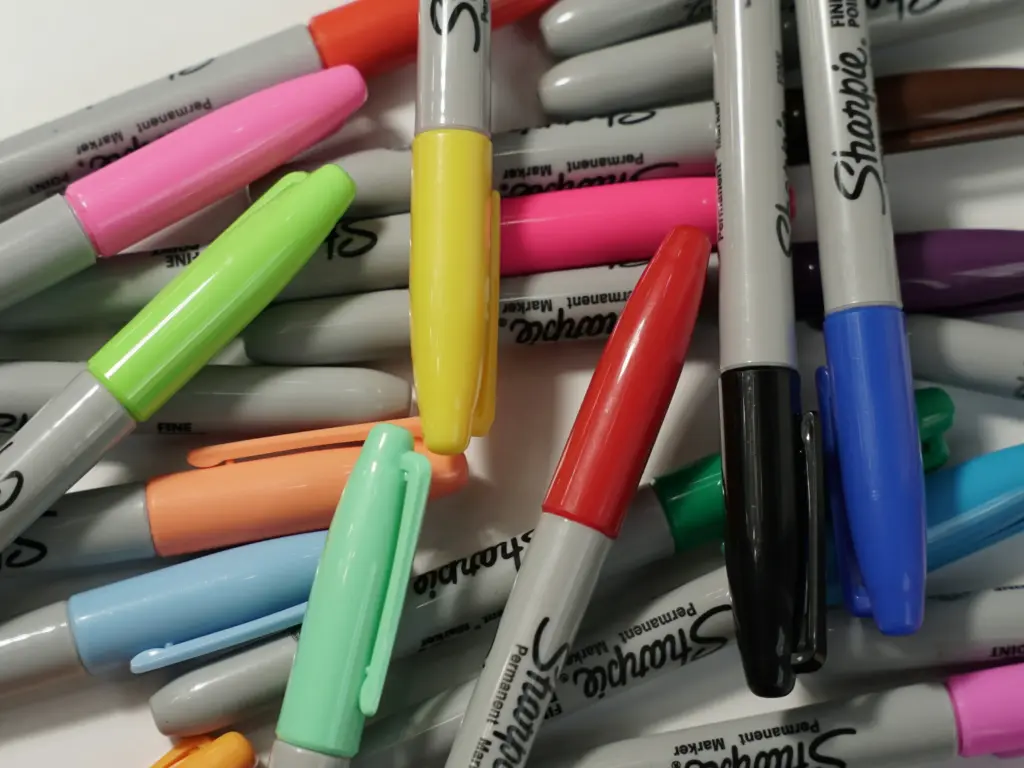
A Sharpie is a permanent marker produced under the Sharpie brand, which belongs to Newell Brands and is manufactured primarily at the company’s plant in Maryville, Tennessee, with additional production reported in Mexico.
For office supply buyers, research-driven readers, and promotional buyers comparing marker and pen programs, it offers a useful case study in how production location follows cost, tariffs, and time rather than brand mythology.
Before treating any “made in” label as a fixed fact, buyers should evaluate the production history, the current plant locations, and what the brand’s supply chain decisions imply for their own sourcing programs.
This guide explains where Sharpies are manufactured today, how the Sanford company behind the brand developed, why production moved overseas and then partially came back, and what the story means for bulk promotional buyers.
Key Takeaways
- Sharpie markers are manufactured primarily in Maryville, Tennessee, where Newell Brands reports producing nearly two million markers per day.
- The brand traces to the Sanford Manufacturing Company, founded in Worcester, Massachusetts, In 1857, which made ink and glue long before it made markers.
- The Sharpie marker launched in 1964 as a pen-style permanent marker; Sanford was acquired by The Newell Companies in 1990.
- Production moved to China in the 2000s and was reshored to Tennessee in 2024 amid tariff pressure, according to Reuters.
- The transferable lesson: production location is a business decision that changes, so bulk buyers should confirm origin, certification, and lead times per order rather than per brand.
Where Are Sharpies Manufactured Today?
The primary answer is Tennessee. Newell Brands produces Sharpie markers at its Maryville, Tennessee plant, which the company has described as producing nearly two million markers per day, covering molding, Montage, filling, and printing on one site. The plant itself has operated for decades; what changed recently is what it produces.
In 2024, Reuters reported that Newell moved writing-instrument manufacturing for its Sharpie line out of China and into the Maryville facility amid tariff pressure. Additional production in Mexicali, Mexico, has also been reported in reference sources, giving the brand a North American manufacturing footprint. Production locations can change between product lines and over time, so buyers who need a specific origin should confirm it against the packaging marking of the actual stock, which carries the country of manufacture.
Sharpie and the Sanford Manufacturing Story
The company behind the marker is older than the marker by more than a century, and its first products had nothing to do with plastic.
The Ink and Glue Era, 1857
Frederick W. Redington and William H. Sanford, Jr. founded the Sanford Manufacturing Company in Worcester, Massachusetts, In 1857. The company produced ink and glue through the decades when American stationery was an industrial business, and it survived into the twentieth century as a specialist in writing inks.
Der 1964 Launch of the Sharpie Marker
In 1964 Sanford introduced the Sharpie, credited as the first pen-style permanent marker: a felt tip in a pen-shaped barrel that wrote on surfaces paper pens could not, without the mess of a bottle and brush. The format defined a category, and the name spread from a product to the everyday word for the category, which is why “Sharpie” now functions as both a trademark and a generic request at the counter.
Newell Ownership and the Modern Brand
The Newell Companies acquired Sanford in 1990, and the Sharpie brand subsequently moved up through Newell Rubbermaid into today’s Newell Brands, which runs it alongside sibling stationery brands including Paper Mate, whose own manufacturing history is covered in the site’s Paper Mate overview. Under group ownership the marker line expanded from the original permanent marker into dozens of tip shapes, ink systems, and colors.
Why Production Moved Overseas
The move overseas was a cost decision, and the move back was a tariff decision, which makes the pair worth reading together.
The Cost Decade
Through the 2000s, Newell shifted Sharpie production to China as part of a broader industry movement: writing instruments are molded, assembled, and filled at high volume, and Chinese factory clusters offered that volume at lower cost. The economics were ordinary for the period, and markers were not exceptional in moving.
Der 2024 Reshoring
In 2024 the direction reversed. As United States tariff policy tightened, Reuters reported that Newell relocated writing-instrument manufacturing from China to the Maryville, Tennessee plant, a facility the company had kept running for decades and was able to scale back up. The company has since presented the plant as proof that domestic production can be cost-effective at marker volumes.
What the Round Trip Shows
The round trip shows that production location is a business variable, not a brand attribute. Kosten, tariffs, logistics, and capacity decide where a marker is made, and a buyer who assumes an origin from a brand’s country of origin story will eventually be wrong. The same applies in both directions across the industry, which is why origin should be read from the packaging of the actual stock rather than assumed from the brand.
Sharpie Quality Standards and Material Sourcing
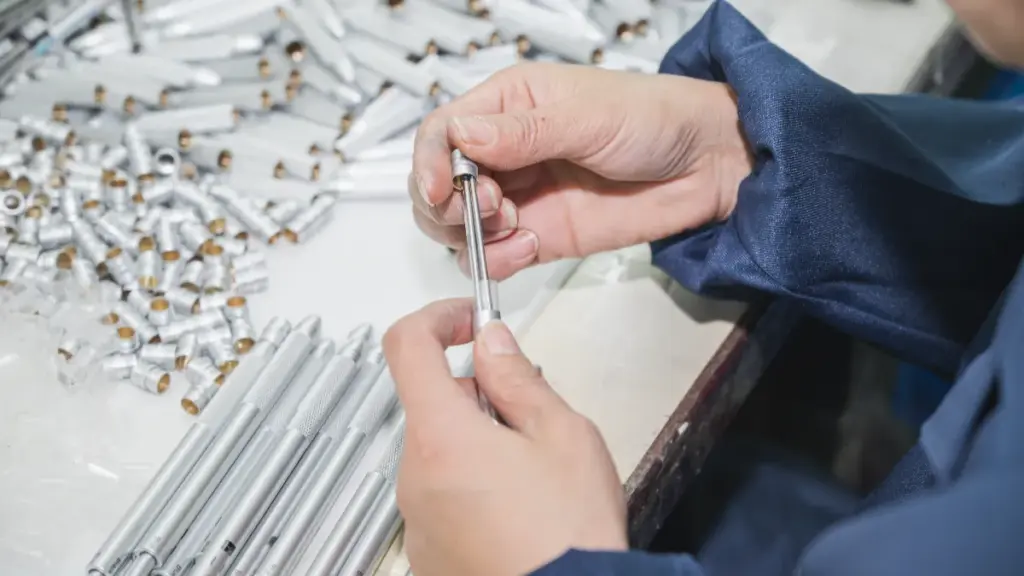
A permanent marker is a simple assembly with tight tolerances: a porous tip, an ink reservoir, a valve or capillary feed, and a barrel that seals against evaporation. The Sharpie standard that made the brand is consistency — the same line weight, the same drying behavior, and the same performance on plastic, Metall, and paper from one marker to the next.
That consistency is produced through formulation and process control rather than geography. Ink chemistry is specified and batch-controlled; tips are sourced to specification; and filling and assembly are inspected in line. A plant running two million units per day depends on that control, and the reshoring to Tennessee relied on transferring the process, not just the equipment.
Für Käufer, the useful standard here is documentation. Ink performance on the intended surface, tip durability, and cap-off time can all be specified and tested, and any custom marker program should confirm them on a physical sample before mass production, exactly as it would for a custom pen order.
Sharpie vs Other Marker Brands Made in the USA
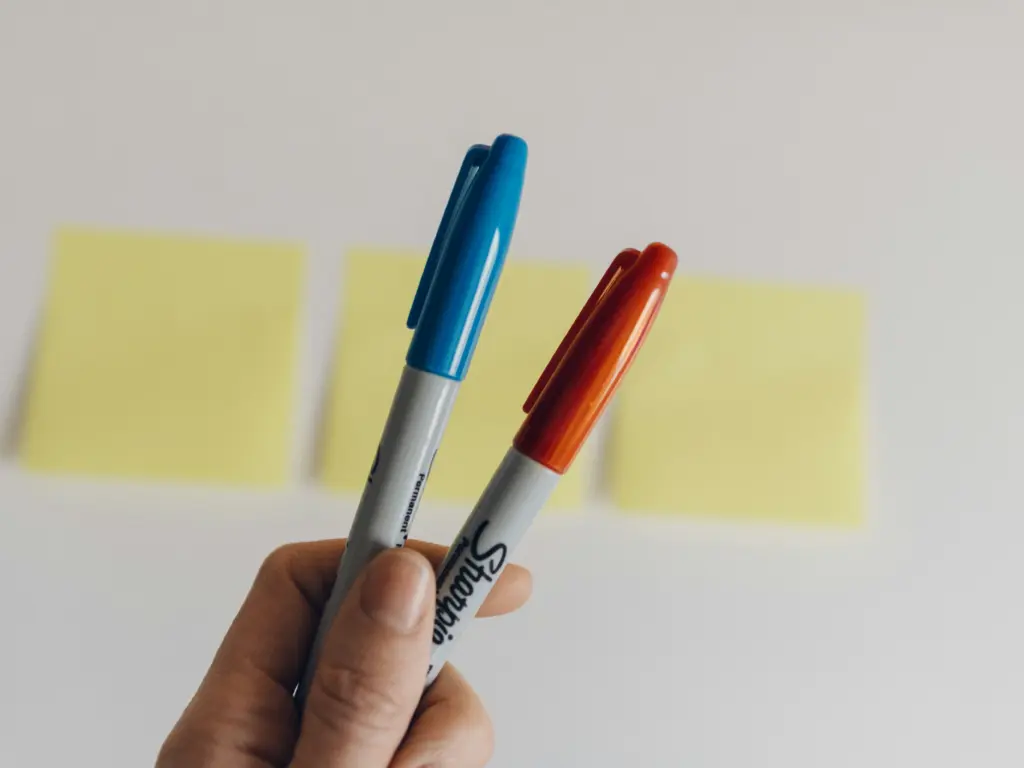
American-made stationery carries a positioning advantage in the United States market, and brands differ in how much of it they can honestly claim. Sharpie, after the 2024 reshoring, produces its flagship volume in Tennessee; crayon maker Crayola has produced in Easton, Pennsylvania for well over a century; and other writing-instrument brands import the bulk of their range from Asia or Mexico.
The comparison for a buyer is less about patriotism than about supply chain behavior. Domestic production shortens the replenishment loop for United States customers and reduces tariff exposure, while imported production, from established factory clusters in China and elsewhere, remains the cost base for most custom and private-label programs. Both models exist for good reasons, and the right one depends on the program’s budget, timeline, and market.
| Brand or model | Production footprint (reported) | Supply chain note |
|---|---|---|
| Sharpie | Maryville, Tennessee; additional production reported in Mexico | Reshored from China in 2024 amid tariff pressure |
| Crayola | Easton, Pennsylvania | Long-running United States production for art materials |
| BIC | Company-owned plants including France, Mexico, and Brazil | Own-factory model across regions, covered in the site’s BIC overview |
| Most imported and private-label brands | Factory clusters across Asia | The cost base for most custom and promotional volume |
Sister brands in the same corporate family illustrate the pattern from earlier decades: Paper Mate and Parker both moved much of their production overseas long before Sharpie moved any of it back, and both remain major brands. BIC, by contrast, kept production inside its own plant network across France, Mexico, and Brazil, a different model with the same underlying logic: manufacturing follows cost, capacity, and market access. The brand survived the move in each case, which is the point buyers should take from the history. The full account of BIC’s factory network is covered in the site’s BIC manufacturing overview.

What Sharpie’s Supply Chain Means for Promotional Buyers
Three implications of the Sharpie story apply directly to promotional and corporate gift programs.
Origin Is a Per-Order Fact
A brand’s production location changes with tariffs, kosten, and capacity, so origin should be confirmed from the packaging marking and the supplier’s shipment documents for each order, not assumed from the brand’s story or from last year’s stock.
Lead Times Reflect the Supply Chain Shape
Domestic production shortens replenishment but draws on a narrower capacity base; imported production carries freight weeks and customs steps but draws on deep factory clusters with flexible capacity. A promotional program should match the mode to its calendar, and reconfirm both lead times and freight before committing dates.
Custom Programs Compare Factories, Not Brands
A retail marker brand is one option for a promotional campaign, but a custom marker or custom pen program is a manufacturing purchase, and manufacturing purchases are evaluated on the factory: certifications, inspection stages, material specifications, and the sample line. The evaluation framework is set out in the site’s guide to evaluating a pen manufacturer, and the same steps apply to custom markers.
Why Choose Le-tian Gifts for Custom Writing Programs?
Le-tian Gifts traces its roots to pen-making in the mid-1990s and was formally incorporated in 2010. The company supplies customized writing instruments for promotional and corporate gift programs, with manufacturing in Wengang, Jiangxi, a well-known pen-making center in China, and an export headquarters in Guangzhou.
Key advantages for custom pen and marker programs include:
- Multiple Writing Instrument Options: Kugelschreiber, Gelstifte, Tintenroller, and fountain pens are available within one product portfolio, making it easier to source different writing instruments for a single promotional or corporate gifting program.
- Flexible Customization Methods: Choose from pad printing, Siebdruck, digital printing, foil stamping, and laser engraving to apply logos and artwork to different pen materials and surfaces. Engraving precision can reach approximately 0.1 mm, depending on the process and product.
- Quality Control and Compliance: Quality checks cover ink stability, metal-part corrosion resistance through 48-hour salt-spray testing, and product durability. Relevant documentation and credentials include SGS, Sicherheitsdatenblatt, and EBO product documentation, along with RoHS, BSCI, and TÜV Rheinland-related certifications or assessments, as applicable to the product or facility.
- Design Support and Flexible Order Quantities: Custom pen programs can start from 100 Einheiten, with free design mockups to help buyers review logo placement and artwork before production. Quotation responses are typically available within approximately 6 hours.
- Sampling and Production Lead Times: Samples typically take around 5–10 days, while pen production generally takes approximately 14–25 days. These are reference timelines and should be confirmed based on the selected product, customization requirements, und Bestellmenge.
The custom pen range is listed in the individuelle Stifte category. Send the model reference, the quantity, and the artwork to Le-tian-Geschenke, and the reply will include a mockup, the applicable documentation, and a quotation with a production window.
Häufig gestellte Fragen
Are Sharpies Still Made in the USA?
Ja, and increasingly so. Newell Brands produces Sharpie markers at its Maryville, Tennessee plant, reported at nearly two million markers per day, after moving writing-instrument production out of China in 2024. Additional production in Mexico has also been reported, so confirm the origin marking on the specific stock.
Who Owns the Sharpie Brand?
Newell Brands. The Newell Companies acquired Sanford, the company that introduced the Sharpie, In 1990, and the brand has remained under Newell through its later reorganizations.
When Was the First Sharpie Made?
In 1964, when Sanford introduced the first pen-style permanent marker. The Sanford company itself dates to 1857 in Worcester, Massachusetts, where it originally produced ink and glue.
Where Were Sharpies Made Before Tennessee?
Production for the United States market was moved to China during the 2000s, following the broader industry pattern, before being reshored to the Maryville plant in 2024. The Maryville facility itself has operated for decades.
Are Sharpies Good for Promotional Branding?
It depends on the audience and the program. Markers suit trade, industrial, and creative audiences where the writing surface matters, while general corporate audiences are usually better served by custom pens, which offer more barrel styles and branding surfaces. Either way, request a printed sample before mass production.
What Can Gift Buyers Learn From Sharpie’s Supply Chain?
That production location moves with tariffs, kosten, and capacity, and that a reliable program confirms origin, certification, and lead times per order rather than per brand. The same discipline applies to custom programs of any size.