Paper Mate is one of the most recognizable pen brands in the world. Its pens are widely used in schools, Büros, and homes across many countries. But a common question from buyers, Händler, and business procurement teams is simple: where are Paper Mate pens manufactured today?
The answer is not as straightforward as it used to be. Paper Mate, like many global stationery brands, now relies on a multi-country manufacturing network. This structure helps the brand control cost, scale production, and meet different regional demands.
In diesem Artikel, we will break down Paper Mate’s manufacturing strategy, product lines, and quality control system. We will also share what B2B buyers can learn from it when sourcing individuelle Stifte at scale.
Wo werden Paper Mate-Stifte hergestellt??

Paper Mate transitioned from its U.S. manufacturing roots to a global supply-chain model under Newell Brands, relying heavily on specialized facilities in Asia and Mexico for mass production.
Historical U.S. and Puerto Rico Roots
Patrick J. Frawley launched the brand in California in the late 1940s under the Frawley Pen Company. The early growth relied entirely on domestic manufacturing. Plants in Culver City and the famous “Pen Factory” in Santa Monica drove early mass production. At their peak, these facilities produced roughly 67,000 pens every single day.
To keep up with surging demand, the company expanded operations into Puerto Rico during the 1950s. This move helped the brand scale rapidly and maintain lower operating costs while keeping logistics tightly integrated with the mainland U.S. market.
Global Shift to Asian Manufacturing
Heute, Paper Mate operates under Newell Brands using a distributed global supply-chain model. The company moved away from single-country production to optimize costs and scale. Factory hubs in China and Southeast Asia now predominantly manufacture the high-volume, everyday plastic pens.
Not all parts come from the same region. Specialized suppliers in Japan frequently manufacture precision components, internal mechanisms, and mechanical pencil leads. This tiered approach allows the brand to separate cheap plastic molding from high-tolerance precision work.
Many global brands partner with experienced China pen manufacturers for cost-effective, high-volume production. Le-tian-Geschenke is a trusted metal pen manufacturer offering custom pens and executive gift sets with low MOQs and reliable quality.
North American and Regional Assembly
While Asia handles the bulk of global volume, North America still manages critical segments of the supply chain. Facilities in Mexico process significant manufacturing volumes to supply the North American and Latin American markets directly. This regional hub reduces transit times and cross-border shipping costs.
Sanford L.P. operates from the U.S. and Canada to handle corporate coordination, product design, and specialized finishing. Across the Atlantic, localized packaging and assembly operations in Europe ensure the products meet regional compliance standards and maintain cost-effective local distribution.
You may also want to know:
Wo werden heute Cross Pens hergestellt??
Wo werden Parker-Stifte hergestellt??
The Paper Mate Story: An American Invention
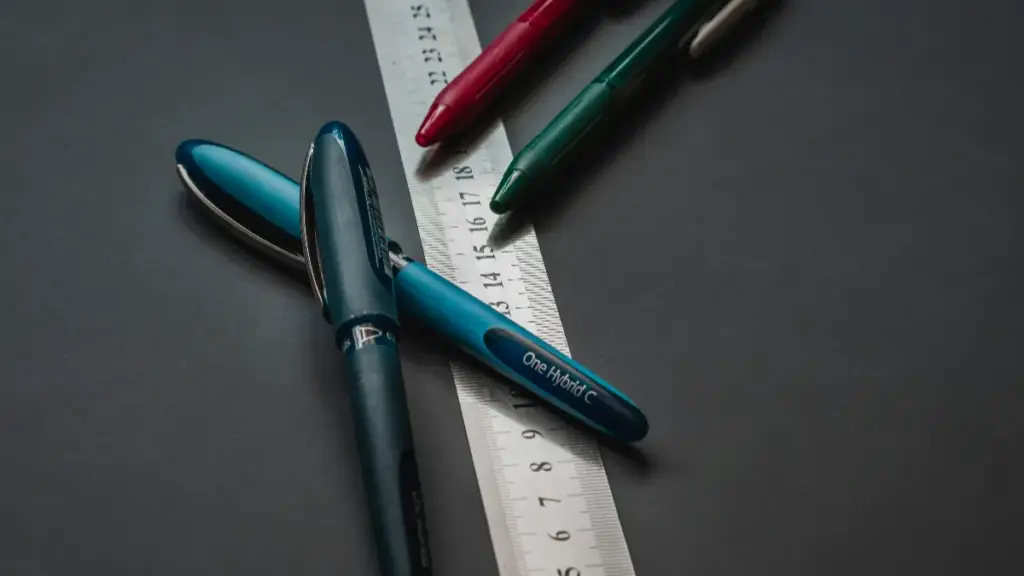
Born from a quick-drying ink innovation in 1949, Paper Mate shifted from localized California manufacturing to a distributed global supply chain under Newell Brands to optimize production costs.
Foundation and the Instant-Drying Ink Innovation
UNS. entrepreneur Patrick J. Frawley launched the brand in 1949 after acquiring a local ballpoint pen parts manufacturer. Early ballpoint pens had a messy, unreliable reputation. Frawley changed that narrative by introducing a breakthrough instant-drying ink engineered specifically to eliminate leaking and smudging.
The company proved this reliability through aggressive retail expansion and live shirt-testing marketing demonstrations. Salesmen scribbled directly on fabric to show buyers the ink would not ruin clothes. This direct, high-visibility approach worked, pushing the company to sell 4 million pens by 1951.
Historical U.S. Manufacturing Footprint
Early production relied heavily on California-based facilities. The company initially built its capacity in Culver City to keep up with surging post-war consumer demand.
Von 1957, operations expanded into a massive Santa Monica plant locally known as the Pen Factory. This site served as the primary manufacturing hub for nearly five decades before shutting down in 2005. As volume requirements grew beyond the mainland, the company expanded its domestic production network to include high-capacity facilities in Puerto Rico, securing their market dominance throughout the mid-20th century.
Transition to Global Sourcing
Newell Brands acquired Paper Mate in 2000 and integrated the pen maker into its massive corporate portfolio. Maintaining legacy urban factories proved unsustainable in a highly commoditized market.
The brand shifted away from centralized domestic production, adopting a distributed global manufacturing model to optimize supply chain costs and leverage regional efficiencies. Heute, manufacturing locations vary heavily by specific model and SKU. Buyers must check individual retail packaging to determine a pen’s exact origin, as production shifts dynamically across international facilities based on corporate sourcing strategies.
Custom Corporate Gifts from Just 100 Einheiten
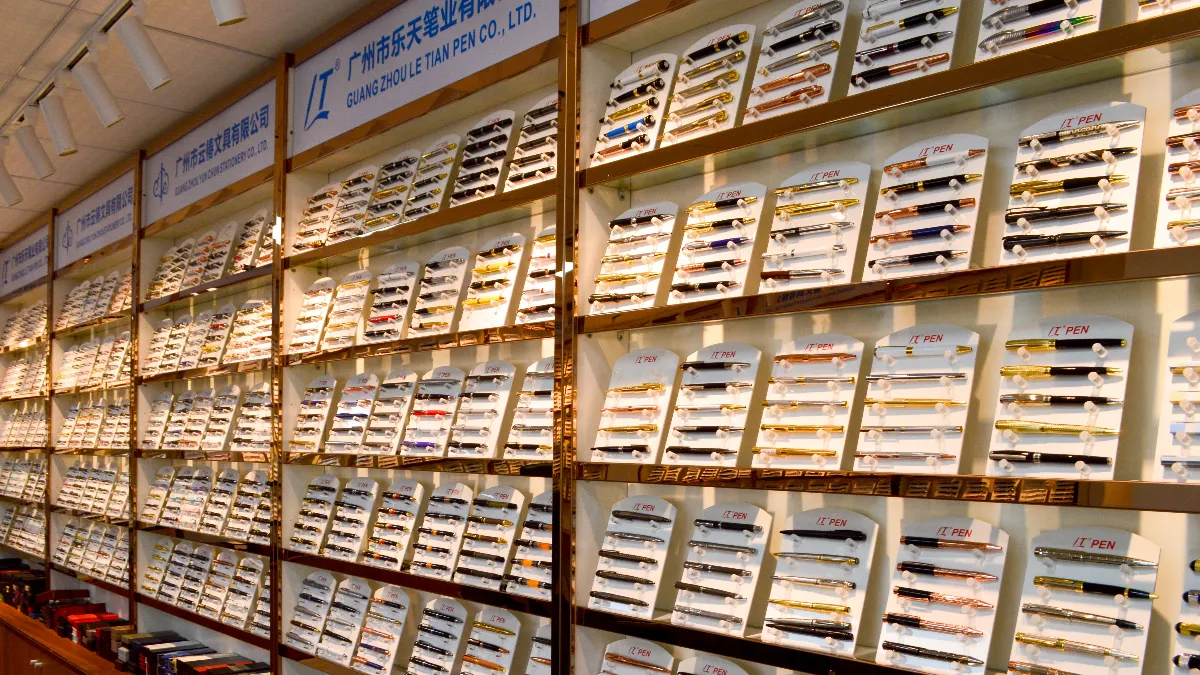
The Shift to Global Manufacturing: Why Paper Mate Moved Production
Rising U.S. costs, demand for high-volume scale, and integration into Newell Brands’ broader portfolio drove Paper Mate’s strategic exit from domestic factories to a globally distributed network.
Cost Optimization and Competitive Pricing
Disposable writing instruments carry notoriously thin margins. Decades ago, rising U.S. labor and overhead expenses made producing these high-volume commodities domestically unsustainable. Retail buyers and office supply chains constantly pushed for lower wholesale prices. To protect profitability, Paper Mate needed a structurally lower cost base.
Transitioning to global manufacturing hubs solved this pricing pressure. The move unlocked massive economies of scale, enabling:
- Lower Unit Costs: Spreading fixed expenses across larger production volumes.
- Bulk Purchasing Power: Acquiring plastics, Tinten, and packaging materials at heavy discounts.
- Advanced Automation: Upgrading to modern, high-throughput assembly lines unavailable in legacy U.S. plants.
Global Supply Chain Integration
A fragmented supply chain kills efficiency in mass manufacturing. Shifting production overseas allowed Paper Mate to physically align its assembly plants with international industrial clusters.
- Inbound Freight Reduction: Sourcing plastic resins, metal tips, and ink components directly next to assembly lines cut shipping costs.
- Shorter Lead Times: Proximity to raw material suppliers meant the brand could react faster to sudden market shifts.
- Production Flexibility: Implementing a hybrid supply chain that mixed Newell-owned facilities with agile contract manufacturers smoothed out seasonal demand spikes.
Market Expansion and Regional Localization
Relying on a single U.S. export base became a massive bottleneck as Paper Mate expanded into Europe, Latin America, and Asia. Shipping low-cost pens across oceans simply did not make economic sense. Moving production into regional hubs eliminated massive international transit times and kept inventory flowing smoothly into local markets.
Decentralized production also solved significant regulatory hurdles. Regional facilities managed localized packaging, unique language labeling, and shifting compliance standards directly at the source. This setup helped the brand quickly adapt its pen designs to match regional preferences and local school supply mandates without disrupting the global pipeline.
Corporate Restructuring Under Newell Brands
Legacy infrastructure eventually reaches a breaking point. Older U.S. plants, like the famous Santa Monica facility that operated until 2005, required massive capital to modernize. Upgrading these aging spaces proved far more expensive than building or contracting modern facilities overseas.
When Newell Brands acquired the company, the manufacturing strategy completely transformed. Paper Mate integrated into the broader Sanford portfolio, allowing it to share factory floors and logistics networks with sister brands like Sharpie. Consolidating global procurement allowed Newell to spread fixed operational costs across hundreds of millions of writing instruments, permanently shifting Paper Mate out of standalone domestic factories.
Primary Manufacturing Hubs: China, Mexico, and India
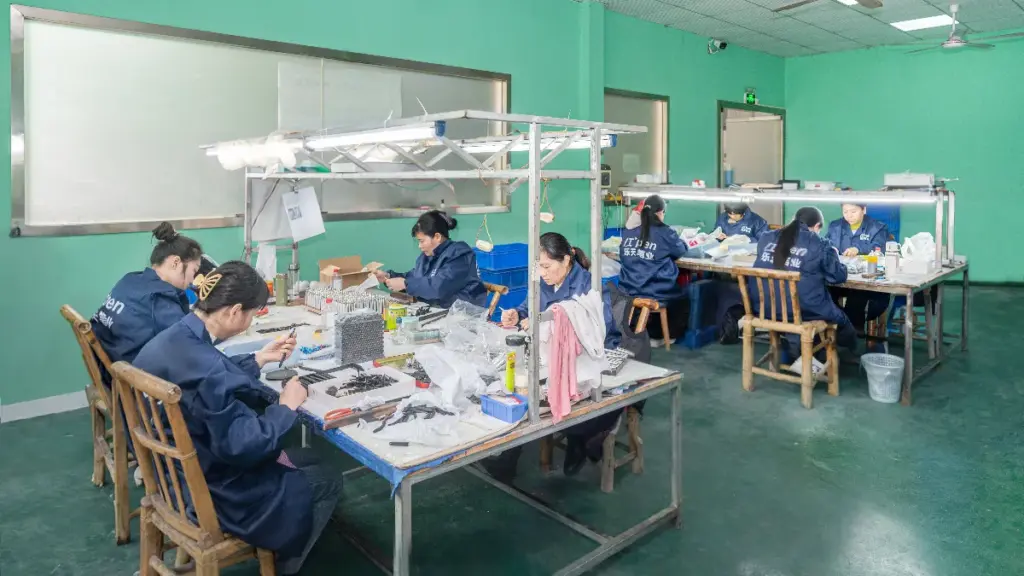
Global stationery brands rely on China, Mexico, and India to balance component sourcing, labor costs, and regional distribution for high-volume pens.
| Manufacturing Hub | Primary Role | Strategic Advantage |
|---|---|---|
| China | Component production & mass assembly | Integrated plastics and metals supply chain |
| Mexico | Regional packaging & Montage | Cross-border logistics and U.S. proximity |
| India | Contract manufacturing & regional supply | Low-cost labor and local raw materials |
China: High-Volume Production and Component Manufacturing
China operates as the undisputed global center for large-scale plastics and metals manufacturing within the integrated stationery supply chain. Factory clusters in this region process the massive material throughput required to supply worldwide retail networks.
- Component Localization: Chinese facilities produce higher-value components, including precision metal pen tips, to reduce reliance on imported parts.
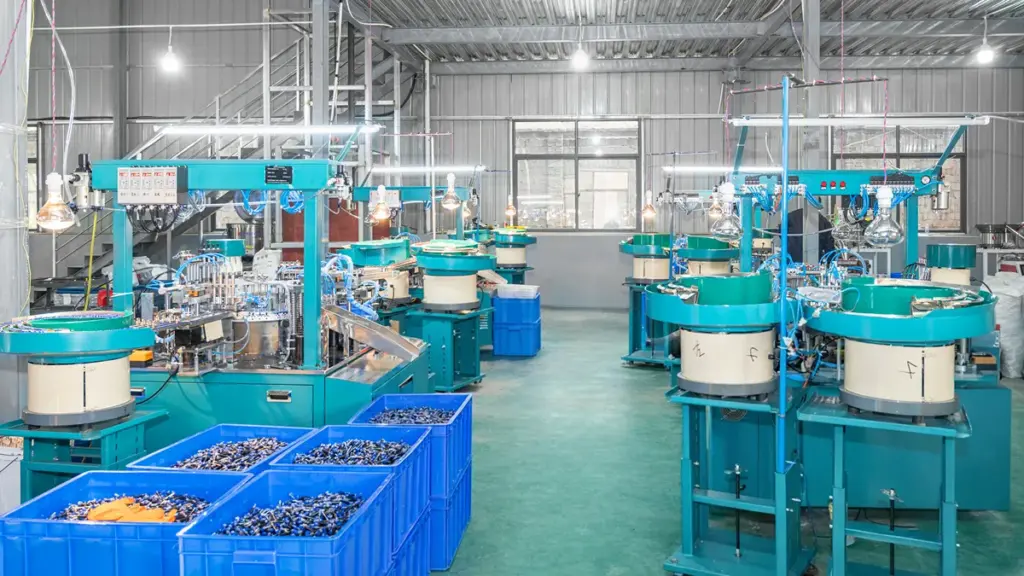
- Mass Assembly: Automated lines handle high-volume pen assembly and produce molded plastic barrels at scale.
- Export Distribution: Plants focus on export-oriented commodity manufacturing designed for immediate worldwide distribution.
Mexico: Regional Assembly for North American Markets
Mexico acts as a strategic manufacturing base supported by established industrial zones and immediate physical proximity to the United States. This geographic positioning directly serves the high-velocity demands of North American retail channels.
- Strategic Positioning: Industrial zones adjacent to the U.S. border provide a stable, accessible manufacturing footprint.
- Logistics Advantages: Cross-border transit yields lower shipping times for U.S.-bound goods compared to Asian imports.
- Regional Focus: Facilities prioritize assembly, Verpackung, and distribution-oriented production tailored for North American buyers.
India: Cost-Efficient Scale and South Asian Distribution
India leverages a massive domestic market and rapidly expanding export capabilities to support growing stationery production. The region balances heavy internal consumption with reliable outgoing international supply.
- Local Sourcing: Factories facilitate local purchasing for plastic and ink inputs while accommodating labor-intensive assembly requirements.
- Contract Manufacturing: The country functions as a primary location for outsourced production and regional market supply.
- Cost Control: Manufacturers focus heavily on cost-sensitive pen lines that require tight margins to remain competitive.
Strategic Division of Supply Chain Roles
Kugelschreiber operate on thin margins. Spreading production across multiple countries optimizes labor costs, tariff efficiency, and raw-material availability for these highly commoditized products.
- Process Placement: Complex multi-step manufacturing dictates strategic placement for specific stages like injection molding, ink formulation, and final assembly.
- Component Access: A distributed global footprint ensures consistent access to the precision tips and stainless steel balls required for reliable ink performance.
- Cost Optimization: Diversifying locations mitigates the risks of regional trade disputes and fluctuating global labor rates.
Does “Made in China” Affect Paper Mate’s Reliability?
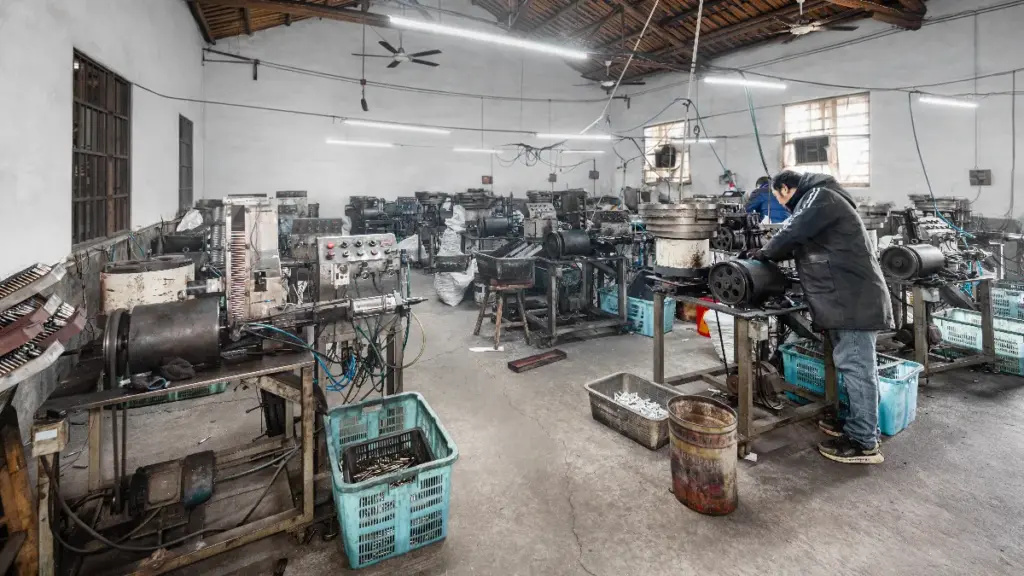
Paper Mate’s reliability depends on Newell Brands’ centralized quality control specifications and strict testing protocols, not the geographic location of the manufacturing plant.
Brand-Level Quality Controls Over Country of Origin
When you see a “Made in China” label on a Paper Mate pen, you are looking at a product governed by Newell Brands’ centralized quality systems. The parent company dictates strict global specifications for every pen, regardless of the factory address. Facilities worldwide must execute identical testing protocols to qualify for mass production.
- Line Specifications: Exact tolerances for line width and total writing length meters.
- Ink Performance: Required ink viscosity levels and mandatory leak resistance checks.
- Physical Durability: Standardized drop tests and structural integrity evaluations for barrels and clips.
Newell qualifies its suppliers through rigorous technical audits, ISO standards, and AQL-based quality assurance sampling. The geographic location simply provides the facility, while the corporate brand strictly enforces the reliability standards.
How the Chinese Manufacturing Ecosystem Impacts Production
The Chinese Herstellung ecosystem actively strengthens mass-market pen production. China offers a highly mature supply base organized into specialized industrial clusters. These hubs provide immediate, local access to critical components like plastic resins, precision metal tips, and ink cartridges.
This supplier density allows Paper Mate to leverage large-scale automation and optimized cost structures. The company can integrate better feature sets into everyday pens without raising retail prices. Factory partners also offer rapid tooling flexibility, meaning engineers can quickly correct mold defects or adjust physical designs. Centralized corporate oversight keeps the high-volume output in check, mitigating the risk of quality drift over long production runs.
Product Line Differences vs. Geographic Origins
Users often misattribute performance issues to the manufacturing country rather than the specific product tier. Mainline series like InkJoy, Flair, and Write Bros. maintain tight brand reliability targets whether the factory sits in Mexico, India, or China.
When you notice significant performance variations, the root cause usually lies in the product category itself. Older pen generations, different budget tiers, or poor long-term storage conditions degrade ink flow far more than factory location. You must also watch out for counterfeit mass-market pens. Fakes frequently misuse origin labels to look authentic, but they completely lack the brand’s quality assurance oversight.
Practical Steps to Ensure Consistent Performance
You can take specific actions to guarantee reliable writing performance from your inventory. Stop focusing on the origin label printed on the packaging and evaluate the actual Paper Mate series that fits your use case.
- Sourcing: Buy pens strictly through reputable retail channels and official distributors to eliminate counterfeit risks.
- Tracking: Check batch and date codes if you encounter issues. Report persistent defect trends directly to official brand support channels.
- Storage: Keep writing instruments in moderate temperatures. Extreme heat or cold degrades ink seals and ruins performance independently of the manufacturing origin.
Understanding Paper Mate’s Product Lines (InkJoy, Flair)
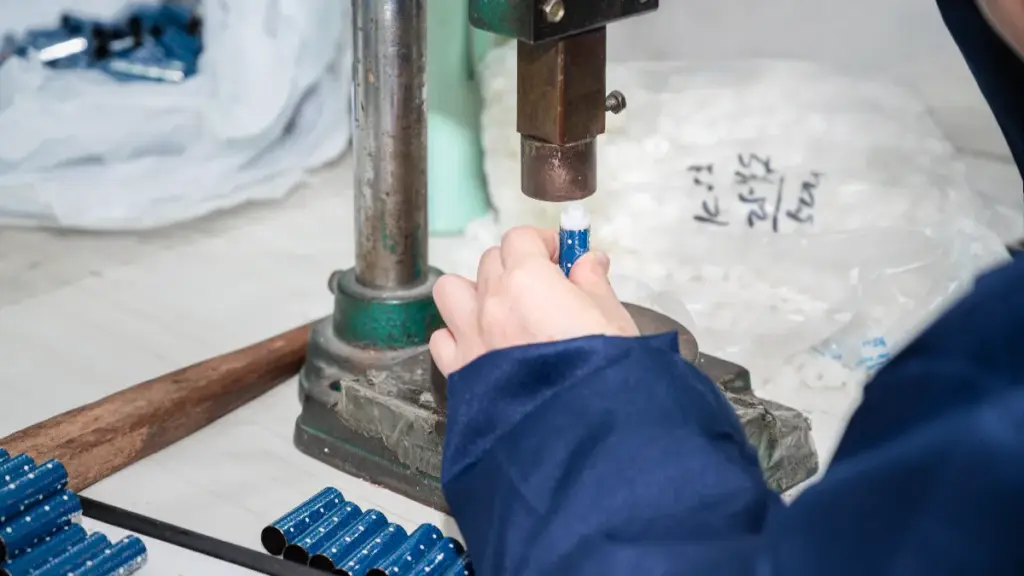
Paper Mate relies on high-volume automated manufacturing and strict global quality controls to produce consistent, low-cost writing instruments across its core InkJoy and Flair portfolios.
Overview of the Paper Mate Portfolio
Paper Mate built its reputation on mass-market reliability. The brand’s product architecture centers on high-volume automated assembly, allowing cost-effective production across multiple countries while maintaining strict functional tolerances.
- Core Categories: The portfolio spans everyday ballpoints, pigmented gel pens, porous-point felt pens, and mechanical pencils.
- Material Foundation: Most lines utilize injection-molded plastic barrels engineered for rapid production.
- Internal Mechanics: Pens rely on standardized refill cartridges or internal ink reservoirs matched with precision metal or fiber tips.
InkJoy: Ballpoint and Gel Pen Construction
The InkJoy line serves as Paper Mate’s flagship smooth-writing series. Engineers designed this lineup to utilize ultra-low viscosity ballpoint ink and heavily pigmented gel options, ensuring minimal skipping and fast dry times.
- Construction Materials: Assembly combines injection-molded thermoplastics with precision metal tip components.
- Manufacturing Hubs: Mass production occurs in large-scale international facilities, frequently in China, to support massive volume demands and reduce unit costs.
- Quality Control: Newell Brands enforces central testing protocols to guarantee consistent ink flow and starting reliability, regardless of the physical factory location.
Flair: Porous-Point Pen Characteristics
The Flair series steps away from ballpoint mechanics, operating entirely as a porous-point felt pen. Instead of a standard ink cartridge, Flair pens rely on a specialized fiber tip drawing from an internal saturated fiber core filled with water-based or dye-based ink.
Producing these marker-like pens requires specialized manufacturing protocols. Tip manufacturing usually happens in dedicated facilities before components move to regional plants for final assembly.
- Viskosität der Tinte: Strictly monitored to ensure vivid, consistent line marking without blotting or feathering.
- Tip Wicking: Precision controls manage exactly how fast the internal fiber core feeds ink to the tip.
- Cap Ventilation: Engineered directly into the molded plastic to prevent premature dry-out and meet physical safety standards.
Environmental and Sustainability Initiatives
Newell Brands actively adjusts Paper Mate’s global supply chain to address resource consumption. Production facilities now integrate recycled plastics into specific pen components, gradually reducing the brand’s dependence on virgin raw materials.
- Operational Adjustments: Manufacturing plants target reduced energy consumption, optimized wastewater management, and improved overall resource efficiency.
- Corporate Partnerships: Production practices align with broader corporate initiatives focused on global reforestation and ecosystem protection.
Quality Control in High-Volume Pen Manufacturing
Mass-producing millions of pens requires standardized quality control to guarantee consistent ink flow, structural integrity, and regulatory compliance across global manufacturing facilities.
Incoming Material Inspection
Global pen brands manage complex supply chains spanning multiple countries. To maintain brand consistency before manufacturing begins, factories execute strict incoming material inspections.
- Plastic resins: Verify grades, color masterbatch consistency, and melt flow indices.
- Metal components: Inspect metal tips and tungsten carbide balls for dimensional accuracy and surface finish.
- Ink formulation: Test raw materials for purity and stability against central specification databases.
In-Process Quality Checks
Active production lines require real-time monitoring to catch variations before they scale into thousands of defective units. Operators and automated systems sample components directly off the mold and filling stations.
- Molded parts: Measure barrel and cap dimensions to guarantee tight snap-fits and grip comfort.
- Fluid control: Monitor ink viscosity, color strength, and fill volume using inline weighing or volumetric dosing.
- Tip geometry: Sample assemblies for orifice diameter and ball seat concentricity to ensure uniform ink flow.
Performance and Durability Testing
A pen must survive harsh shipping conditions and rough everyday use. Technicians submit finished batches to physical stress tests and mechanical longevity trials.
- Longevity benchmarks: Execute writing distance tests on mechanical machines to meet minimum write-out lengths.
- Leak prevention: Perform vacuum and centrifuge tests to guarantee seal integrity during air transport and high-vibration shipping.
- Structural robustness: Conduct drop tests and cap cycling checks to verify durability under everyday handling.
Final Assembly and End-of-Line Audits
The final assembly stage merges ink cartridges, tips, and barrels at high speeds. Quality systems at this phase rely on automated detection and statistical frameworks to block defective products from reaching the packaging line.
- Automated detection: Utilize inline vision systems to flag misaligned components, missing tips, or printing errors in real time.
- Process tracking: Implement Statistical Process Control (SPC) to track production variation and identify tool wear early.
- Batch approval: Perform random sampling and functional checks against defined Acceptable Quality Limit (AQL) thresholds.
Safety and Regulatory Compliance
Writing instruments destined for schools and international markets must meet strict consumer safety laws. Compliance teams audit product designs and materials to navigate regional regulations.
- Child safety: Ensure small-diameter pens feature vented caps to mitigate choking hazards for school-targeted lines.
- Chemical limits: Verify ink formulas comply with regional restrictions on heavy metals and volatile organic compounds (VOCs).
- Legal labeling: Check for durable, accurate country-of-origin and safety warning text on individual pens and packaging.
What to Look for in a High-Volume Pen Supplier
Sourcing pens at scale requires moving beyond unit price. You need a partner with multi-region redundancy, strict defect control, and transparent volume pricing to guarantee stable, long-term procurement.
Manufacturing Capacity and Supply Chain Stability
A single factory creates a single point of failure. Institutional buyers need custom pen suppliers with the physical infrastructure to absorb massive order volumes without cracking under pressure.
- Global redundancy: Multi-plant networks mitigate regional supply disruptions and handle recurring large orders.
- Seasonal scalability: Facilities must accommodate sudden production ramps for back-to-school rushes or end-of-year corporate procurement.
- Logistics flexibility: Established regional distribution hubs support vendor-managed inventory (VMI) and maintain safety stock reserves.
Quality Control and Batch Consistency
Producing one good pen is easy. Producing ten million identical pens requires rigorous, standardized oversight across every production line.
- Unified specifications: Strict tolerances ensure uniform ink flow, color density, and mechanical reliability regardless of the facility.
- Documented metrics: Suppliers must provide formal quality certifications and historical data on defect rates for common failures like ink leakage or broken clips.
- Batch traceability: Packaging lot codes allow buyers to trace specific units back to their exact plant and production line if an issue arises.
Cost Structure and Volume Pricing
Volume procurement demands more than a low per-unit quote. True cost efficiency comes from scale, contract stability, and complete financial transparency.
- Tiered brackets: Massive production scale allows suppliers to offer competitive pricing thresholds specifically designed for enterprise and institutional buyers.
- Volatility management: Long-term agreements help absorb price fluctuations in raw materials like plastic resins, metal tips, and ink chemicals.
- Total cost transparency: Quotes must cover the base unit price alongside import duties, expected waste rates, and bulk packaging savings.
Product Range and Anpassung Options
Consolidating your supply chain requires a partner who can fill multiple roles. A diverse catalog prevents buyers from managing a fractured network of niche vendors.
- Extensive catalogs: A mix of ink types, tip sizes, and complementary instruments allows organizations to standardize procurement under one roof.
- Advanced branding: Facilities need the equipment to execute multi-color imprinting, durable screen printing, and exact corporate color matching at scale.
- Adaptable packaging: Buyers require flexibility, choosing between minimal-waste bulk cartons for internal use and retail-ready blister packs for resale.
Sustainability and Regulatory Compliance
Procurement decisions increasingly carry regulatory and reputational weight. Modern suppliers must align with global safety standards and corporate responsibility mandates.
- Material sustainability: Facilities utilizing recycled plastics and energy-efficient manufacturing help buyers hit corporate environmental targets.
- Regional compliance: Suppliers must verify adherence to specific safety standards, including non-toxic ink formulations essential for school districts.
- Ethical practices: Reliable operations validate their labor standards through third-party social audits and strictly enforced supplier codes of conduct.
Need Consistent Quality at Scale? Explore Letian Gifts’ OEM Services
High-volume pen production requires strict material oversight and locked QA protocols. Letian Gifts provides OEM manufacturing designed to mirror the quality consistency of top-tier global stationery brands.
While global brands like Paper Mate rely on large-scale manufacturing networks, many businesses today are building their own branded pen products for marketing and corporate gifting.
This is where OEM manufacturers play a key role.
Le-tian-Geschenke specializes in customized writing instruments and corporate gift solutions, supporting businesses that need:
- Low MOQ starting from 100 Einheiten
- Fast sample development (5–10 Tage)
- Full customization (Logo, Farbe, Verpackung)
- Stable mass production up to millions of units
Unlike standard retail brands, OEM partners allow companies to:
- Build private label pen collections
- Create executive gift sets (Stift + notebook)
- Control branding consistency across markets
For companies comparing pen suppliers, the key difference is flexibility. Global brands optimize for mass distribution, while OEM factories optimize for brand customization and speed to market.
Letzte Gedanken
Paper Mate is an American brand, but its pens are now manufactured through a global network that includes China, Mexico, India, and other specialized supply hubs. This approach allows the company to balance cost, Qualität, and production scale while serving millions of users worldwide.
Für Käufer, the most important takeaway is that manufacturing location alone does not determine product quality. What matters most is the supplier’s engineering capability, quality control system, and ability to deliver consistent results over large production runs.
That is why many brands and distributors choose experienced China pen manufacturers for private-label and promotional projects. Le-tian-Geschenke, a trusted metal pen manufacturer, helps businesses create custom pens and executive gift sets with low MOQs, fast sampling, and dependable quality at scale.
Häufig gestellte Fragen
Who owns the Paper Mate brand?
Newell Brands Inc., a publicly traded U.S. consumer products conglomerate, owns Paper Mate. Newell acquired the brand in 2000 from Gillette’s stationery division. Heute, Paper Mate operates within Newell’s writing segment alongside brands like Sharpie, Parker, EXPO, and Waterman.
Are Paper Mate pens non-toxic?
Ja, Newell Brands formulates Paper Mate pens to be non-toxic under normal, intended use. The ink and plastic components comply with standard U.S. and international consumer safety regulations, including ASTM D-4236 for school and art supplies. While they are safe for skin contact and everyday writing, no pen is safe for ingestion. Small removable parts also remain a potential choking hazard.
When did Paper Mate stop making erasable pens?
Paper Mate never completely stopped manufacturing erasable pens globally. The company routinely discontinues specific models, such as the Eraser Max gel pen, as part of standard product lifecycle management. When older erasable formulas phase out, the brand replaces them with improved versions or limits them to specific regional markets.
What is the most popular Paper Mate pen?
The Paper Mate InkJoy line stands out as the brand’s most popular modern pen, highly visible across retail and office supply channels. Historically, the original Paper Mate ballpoint pen holds the title of the most iconic product, establishing the brand’s reputation with its instant-drying ink.
Are Paper Mate InkJoy pens good?
InkJoy gel pens perform exceptionally well for mass-market writing instruments. They deliver a smooth writing experience, fast-drying ink that minimizes smearing, and highly saturated colors. The primary drawbacks involve their disposable nature—since they lack refill options—and a wet ink formula that can show through thin planner or notebook paper.
Where are Sharpie markers made?
Newell Brands primarily manufactures Sharpie markers in Maryville, Tennessee, with supplementary production in Mexicali, Mexico. The Maryville plant handles the vast majority of Sharpie output, assembling domestic plastic components with felt tips imported from Japan.