Zum Inhalt springen



When choosing notebooks for corporate gifts, Bürobedarf, or retail products, buyers often focus on the cover design and printing options first. Jedoch, the binding structure is one of the most important factors that affects the notebook’s durability, Schreiberfahrung, appearance, and overall value.
A bound notebook is a classic notebook format where the inner pages are permanently attached to the cover through professional binding methods. Compared with spiral or wire-bound notebooks, bound notebooks offer a cleaner appearance, stronger brand presentation, and a more premium feel, making them widely used for business gifts, executive stationery, Zeitschriften, and customized promotional products.
For companies looking to order custom notebooks in bulk, understanding the structure, binding types, material options, and application scenarios helps ensure the final product matches the intended market and brand image.
Was ist ein gebundenes Notizbuch??
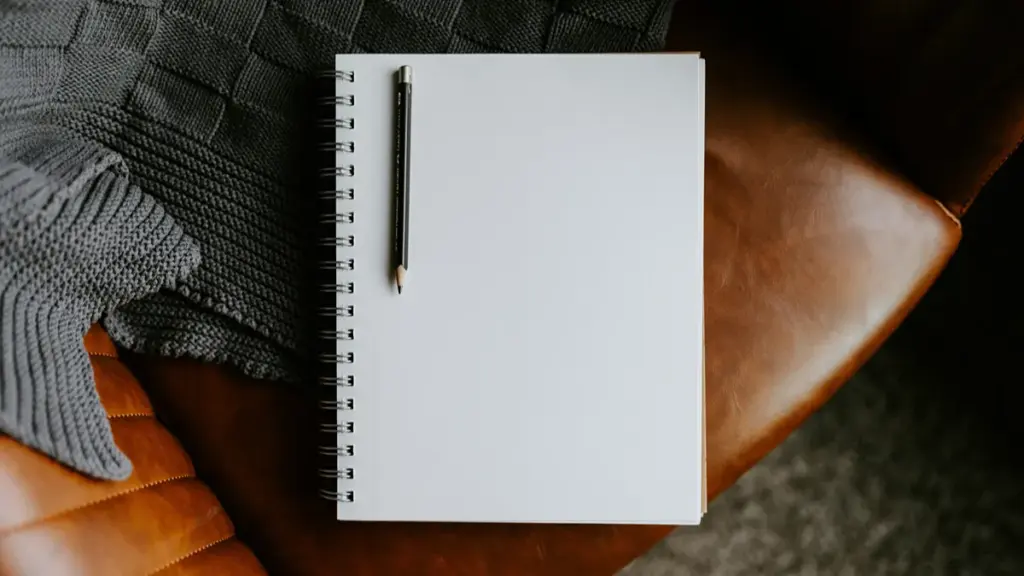
A bound notebook is a notebook where the pages are securely attached to the cover using methods such as glue binding, thread sewing, or case binding. Unlike spiral notebooks that use metal or plastic coils to hold pages together, bound notebooks have a fixed spine that creates a book-like appearance.
The binding process connects the notebook cover, spine, and inner pages into one complete structure. This design provides better protection for the pages and gives the notebook a more professional and elegant appearance.
A typical bound notebook includes the following components:
| Component | Description |
|---|---|
| Cover | The outer layer that protects the inner pages and provides space for branding. |
| Spine | The connected edge that holds pages together and determines the notebook’s opening style. |
| Endpapers | Extra sheets that connect the cover and inner pages in higher-quality notebook constructions. |
| Inner Pages | Paper sheets used for writing, Drucken, or customized applications. |
| Binding Adhesive or Thread | Materials used to permanently secure the pages and maintain the notebook’s structure. |
Bound notebooks are available in many styles, including softcover notebooks, hardcover notebooks, journal-style notebooks, and premium corporate notebooks. The choice depends on the target market, Budget, and expected product lifespan.
For businesses, bound notebooks are especially popular because they combine practical daily use with strong brand visibility. A customized notebook with a company logo, special cover material, and matching pen can become a long-lasting promotional tool.
Bound Notebook Structure and Common Spine Construction Types
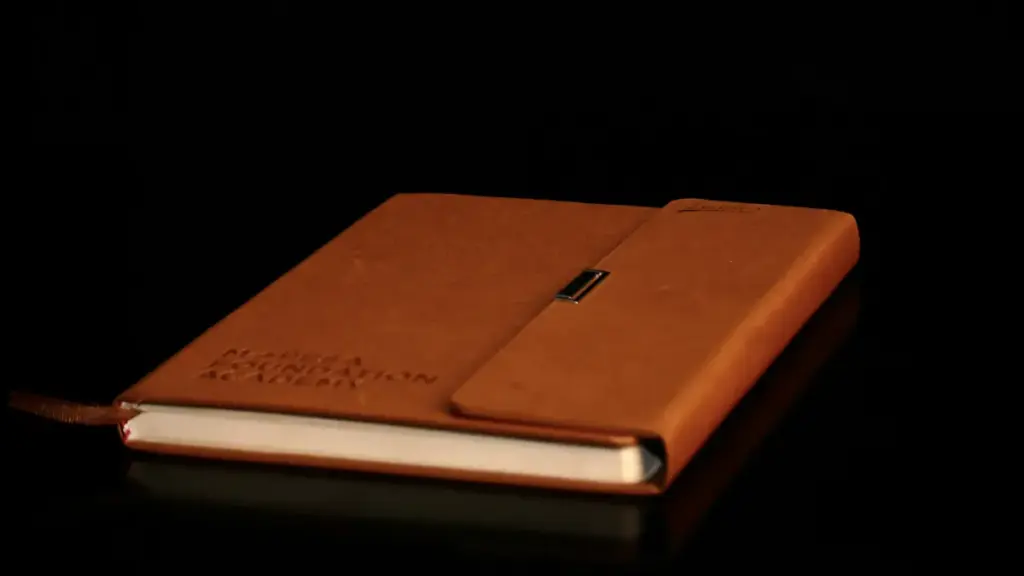
Selecting the right bound notebook structure depends on matching the mechanical spine construction to your specific security, Haltbarkeit, and ergonomic requirements.
How do you ensure your team’s field notes or laboratory records do not lose critical pages over time? The physical architecture of bound notebooks dictates how well these records survive daily handling, direct environmental exposure, and archiving.
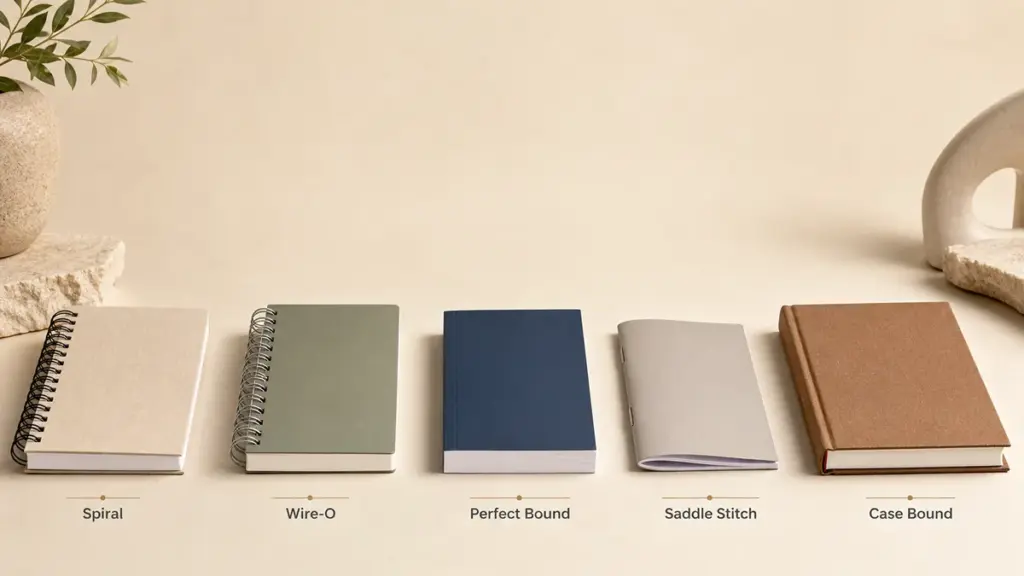
| Spine Type | Lay-Flat / Fold-Over | Page Permanence | Typical Use Cases |
|---|---|---|---|
| Spiral (Coil) | Fully flat; 360° | Mäßig (often perforated) | School, sketching, project notes |
| Wire-O (Double-Loop) | Fully flat; 360° | Mäßig | Premium office notebooks, Planer |
| Casebound (Hardcover) | Partly to near-flat | High (non-removable) | Lab notebooks, archival journals |
| Perfect Bound | Limited lay-flat | Mäßig | Inexpensive pads, student notebooks |
| Sewn (Smyth-Sewn) | Good to near-flat | High | Archival, premium, and lab notebooks |
| Staple-Stitched | Flat for thin books | Mäßig | Exercise books, short booklets |
Core Anatomy and Structural Elements of Bound Notebooks
The overall durability of a book-style notebook depends on how its basic components handle constant mechanical stress. A breakdown in any single component can cause the book block to separate from its cover.
- Text Block: This core element comprises gathered, folded, or stacked sheets of paper featuring ruled, grid, or blank layout patterns optimized for writing or sketching.
- Spine Edge: This edge acts as the central anchor point that permanently joins the sheet block to prevent routine page removal.
- Protective Covers: Made of flexible plastic, laminated cardboard, or heavy hardboard, these structures provide a stable writing foundation and safeguard the inner sheets.
- Endpapers and Hinges: These elements attach the inner text block directly to the outer casing in premium book-style constructions, reinforcing the primary stress points.
Functional Characteristics and Record Security Standards
In corporate, scientific, and legal environments, paper records function as a direct audit trail. The physical constraints of the spine determine whether the notebook complies with industry data retention standards.
- Permanent Sequence: A fixed chronological page order ensures the integrity of written records, preventing unauthorized page replacement or deletion.
- Non-Perforated Pages: Solid sheets discourage page removal, maintaining legal compliance and data continuity in laboratory and archival environments.
- Opening Behavior: Spine movement dynamics dictate whether the notebook lays completely flat during active use or relies on manual support to stay open.
- Tamper-Evident Design: These structures protect proprietary ideas, experimental notes, and official audits from deletion or physical loss.
Mechanical and Wire-Based Spine Systems
Mechanical spine systems use metal or plastic elements to link pages together. These options provide maximum flexibility for professionals who write while standing or working in compact workspaces.
- Spiral Coil Binding: This method utilizes a continuous plastic or metal wire loop, facilitating complete 360-degree page rotation and simple lay-flat usage.
- Wire-O Binding: This system crimps paired metal loops through punched holes to keep pages aligned while presenting a professional finish.
- Staple-Stitched Methods: This construction folds and saddle-stitches thin paper counts to provide lightweight, highly cost-effective booklet configurations.
Adhesive and Sewn Spine Systems
Traditional spine systems rely on strong adhesives, thread, or a combination of both. These designs are highly valued for archival purposes because they lack external wires that can catch or crush.
- Casebound Styles: This method sews or glues folded paper signatures directly to rigid hardcovers, offering long-term archival protection and high structural durability.
- Smyth-Sewn Bindings: This approach links folded signatures with strong thread along the fold, balancing reliable lay-flat performance with structural strength.
- Perfect Bound Configurations: This style glues stacked sheets with flexible hot-melt adhesives, producing a clean book-style spine at low production costs.
Engineering and Application Selection Criteria
Selecting the wrong notebook configuration can lead to damaged pages, cracked adhesives, or lost data. Buyers must weigh environmental challenges against their production budgets before committing to a final design.
- Environmental Alignment: Determining the target environment helps align the notebook layout with appropriate moisture-resistant covers and robust spine joints.
- Cost-to-Benefit Analysis: Comparing production budgets against performance expectations aids in choosing between adhesive-only binding and more complex sewn assemblies.
- Ergonomic Demands: User patterns influence whether to select flexible, fold-over mechanical spines or secure, tamper-proof archival covers.
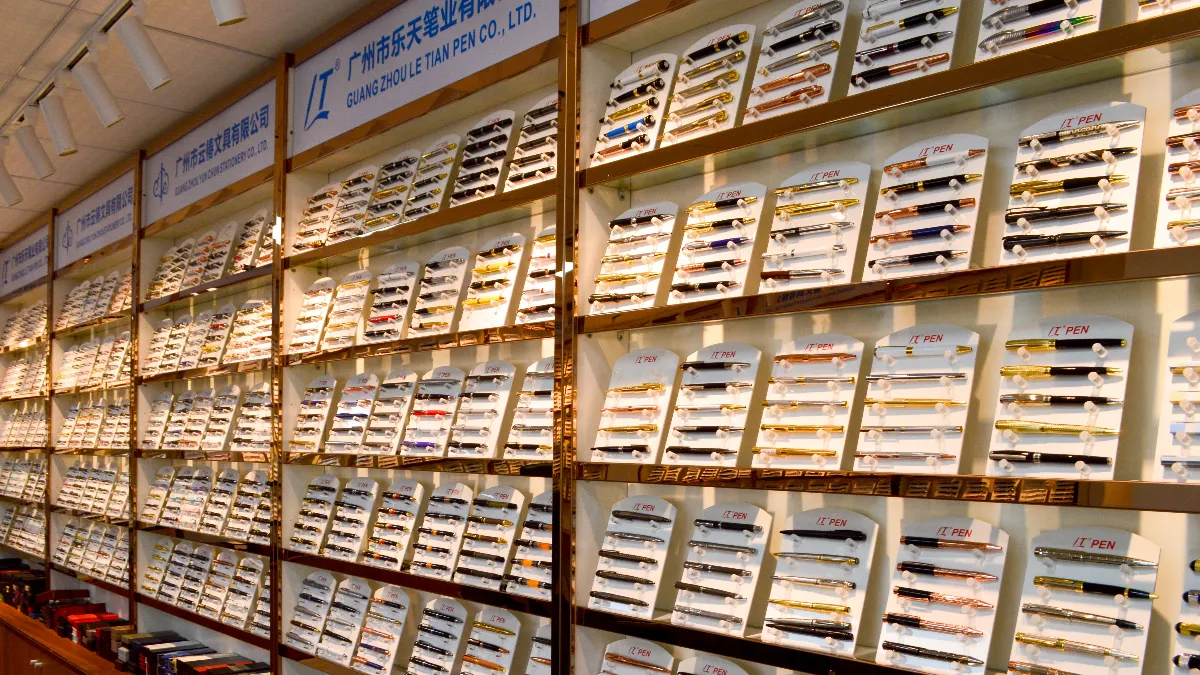
Elevate Your Brand with Premium Gift Pens
Key Benefits of Bound Notebooks for Business Buyers

High-quality bound notebooks blend daily office utility with long-term brand exposure, offering procurement teams a durable, cost-effective alternative to short-lived digital assets.
How do you ensure corporate stationery actually gets used instead of ending up in a desk drawer? Procurement teams often struggle to balance premium brand presentation with strict budget constraints when sourcing physical assets. Selecting the right bound notebooks for business buyers solves this dilemma by turning a simple office supply into a high-utility branding tool.
Brand Visibility and Professional Presentation
Stationery is often the first tangible point of contact a client has with your brand identity. Distributing generic or low-quality promotional items can quietly undermine your market credibility.
- Custom Cover Space: Provides a premium, high-tactility surface for custom company logos and brand messaging directly on the cover.
- Client Gifting: Serves as an elegant client gift or event giveaway that projects professional standards.
- Mobile Advertising: Generates repeated brand exposure as employees use the notebooks in external client meetings.
When your team sits down in a high-stakes meeting, placing a cohesive, beautifully branded notebook on the table establishes immediate professional alignment before anyone says a word.
Superior Durability and Record Security
Cheap bindings fall apart under heavy travel. For critical operations, research, or legal records, page loss is a major administrative liability.
- Structural Strength: Stitched, clothbound, and hardbound covers withstand heavy handling during frequent travel.
- Tamper Resistance: Fixed pages maintain a secure chronological sequence and prevent critical notes from getting lost.
- Analog Reliability: Creates an enduring, reliable physical archive that remains independent of device batteries or software access.
In lab settings or regulatory environments, this permanent page retention is not just a design choice; it is a compliance safeguard that guarantees data integrity over time.
Workspace Productivity and Lay-Flat Usability
Digital notifications constantly pull attention away from deep focus. Analog writing tools help professionals isolate their thoughts, map workflows, and execute complex tasks.
- Focused Workspace: Establishes a dedicated, distraction-free space for organizing daily tasks and project notes.
- Ergonomic Comfort: Lay-flat designs like spiral and wire bindings improve comfort during long training sessions.
- Clutter Reduction: Prevents paper clutter by consolidating scattered thoughts into a single organized system.
Eliminating the physical resistance of a stiff, springy spine lets employees focus entirely on capturing ideas quickly during fast-paced workshops and training seminars.
Purchasing Cost-Efficiency and Volume Options
Purchasing agents must balance marketing or administrative budgets without sacrificing end-user utility. A single notebook style rarely fits the diverse needs of an entire enterprise.
- Budget-Friendly Formats: Staplebound and wirebound formats offer economical alternatives for high-volume office supply orders.
- Adaptive Capacity: Flexible page capacity options accommodate both slim meeting handouts and thick reference manuals.
- Procurement Flexibility: Allows purchasing departments to balance budget constraints with specific department utility needs.
By segmenting bulk orders between premium casebound books for executives and economical wirebound pads for training events, buyers maximize the return on their stationery spend.
Cover Styles Page Counts and Finish Options Explained
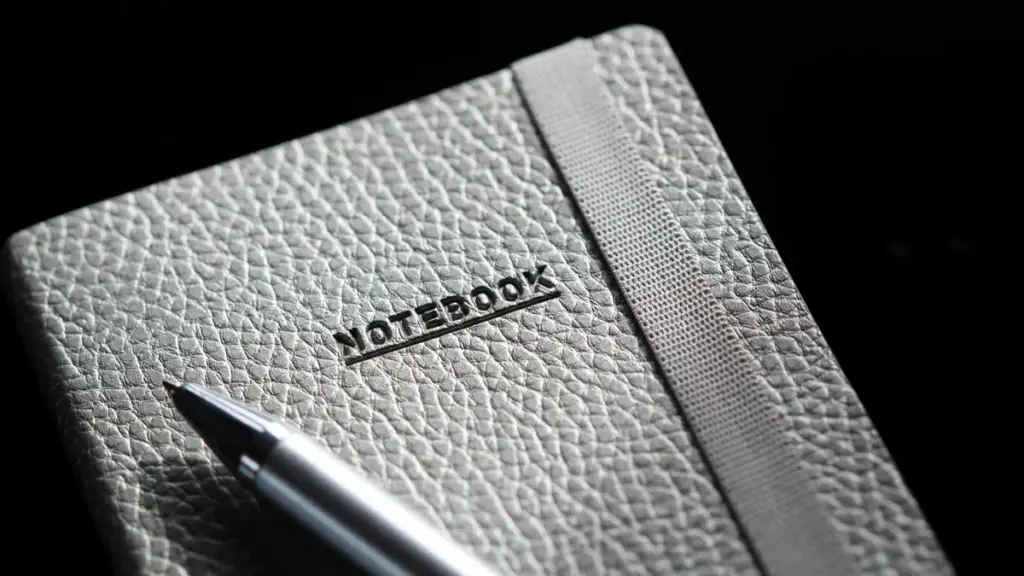
Matching notebook covers, exact spine dimensions, and paper weight to your specific binding style prevents structural failures and elevates brand presentation.
How do you translate complex technical specifications into a physical product when you need cover styles, page counts, and finish options explained for your next manufacturing run? Selecting the wrong combination often leads to structural failure, such as split spines, warping boards, or printed artwork getting cut off at the margins.
Softcover, Hardcover, and Hybrid Cover Styles
Selecting a cover style dictates the durability, tactile feel, and unit cost of your notebook run. Manufacturers categorize these options into distinct families based on material weight and structural rigidity.
- Softcover Options: Utilize flexible 200 Zu 350 gsm card stock attached via perfect binding or saddle stitching for lighter, highly portable profiles.
- Hardcover Construction: Employs rigid binder’s board wrapped in laminated paper, book cloth, or synthetic leather for superior, long-term durability.
- Hybrid Bindings: Include wire-o or spiral construction with rigid backing boards, alongside specialized lay-flat PUR adhesive designs that bridge the gap between hard and soft covers.
While softcovers lower production costs and reduce shipping weight, hardcovers offer the solid support needed to write comfortably without a desk or table nearby.
Technical Cover Layout: Trim, Spine, and Bleed Calculations
Designing cover artwork requires precise mathematical calculations to ensure graphics align perfectly across the front, spine, and back. A minor calculation error can shift your logo off-center or leave unprinted gaps on the edge.
- Trim Size: Determines the final physical dimensions of the notebook, dictating the layout scaling and interior page block thickness.
- Full Cover Spread: Combines front and back cover widths, calculated spine thickness, and safety margins into a single flat design file.
- Bleed Allowances: Edge-to-edge artwork requires a standard 0.125-inch bleed on all sides, while casebound options demand extended wrap-around allowances for the boards.
Calculating spine width depends entirely on your exact page count and paper thickness. Printers calculate this spine space before generating templates to keep cover text perfectly centered.
Page Count Definitions and Binding Limitations
Page count is the ultimate constraint in notebook design. It directly dictates the thickness of the book block and determines which binding methods are physically viable for your project.
- Page-to-Sheet Ratio: Each physical sheet of paper contains two distinct pages (front and back), meaning total page counts must always scale in even increments.
- Binding Limitations: Higher page counts increase the required spine width, making stapled saddle stitching impossible and requiring glued perfect binding or sewn casebinding.
- Functional Planning: Designers must balance functional page allocations across front matter index pages, main writing sheets, and back reference sections.
Saddle-stitched notebooks max out around 64 pages before the center sheets start creeping outward. For high page counts of 120 or more, Smyth sewing keeps the signatures secure under heavy use.
Premium Surface Finishes for Covers and Interior Pages
Specialty finishes protect the notebook from moisture and scuffs while establishing its market positioning. The right tactile treatment increases the perceived value of your product line.
- Laminations: High-shine gloss, elegant matte, and velvety soft-touch options protect covers from moisture, fingerprints, and daily wear.
- Specialty Enhancements: Techniques including spot UV, foil stamping, and debossing create tactile and visual contrast on premium covers.
- Interior Stocks: Paper weights range from standard 70 gsm uncoated sheets for utility notebooks to robust 120 gsm mixed-media stocks for sketchbooks.
Standard Kugelschreiber write well on 80 gsm paper, but fountain pens, Gelstifte, and markers require at least 90 Zu 100 gsm uncoated paper to prevent distracting ink bleed-through.
Structural Cover Anatomy and Practical Use-Cases
Aligning your material choices with the notebook’s final use case keeps production within budget while satisfying customer expectations in different environments.
- Cover Anatomy: The front cover highlights core branding, the spine provides retail shelf visibility, and the back cover hosts product specs and barcodes.
- Visual Layout: Typography and color schemes can be tailored for high-contrast digital shopping thumbnails or minimalist, understated executive styles.
- Market Alignment: Matching specific material combinations satisfies distinct market segments, ranging from school exercise books to archival research journals.
Bright, high-contrast covers with large type stand out quickly in digital marketplaces, whereas neutral linen or debossed faux-leather covers perform best in professional corporate settings.
Commercial Applications Across Office Retail and Gift Markets
How do corporate procurement officers and retail distributors determine which notebook formats deserve inventory budget? Analyzing the commercial applications across office, Einzelhandel, and gift markets shows that success depends on matching specific binding mechanics with the end-user’s daily environment.
Stationery procurement hinges on matching binding durability with user environments, balancing cost-effective utility in retail against premium presentation values in corporate gifting.
Office and Productivity Environments
Corporate workspaces demand reliable tools that streamline daily tasks and protect sensitive information. Professionals rely on physical formats that guarantee records remain intact during back-to-back meetings and off-site travel.
- Meeting workflows: Bound notebooks with ruled pages and letter-size formats capture daily notes, action items, and project planning details.
- Durability in work settings: Hard covers and elastic closures protect written records during transit and daily handling.
- Functional design: Spiral and wire-bound formats allow pages to turn easily and lay flat for comfortable writing.
Retail Distribution and Stationery Channels
For retail buyers, managing a stationery category requires a strategic mix of high-turnover staples and specialized utility items. This ensures consistent shelf performance across diverse buyer demographics.
- Core inventory: Notebooks serve as steady retail items stocked alongside standard binders, folders, and writing supplies.
- Format variety: Retailers maintain diverse options in size, ruling, and binding to meet different student and professional preferences.
- Small business utility: B2B retail segments supply all-weather and field-ready notebooks for operational tracking and site work.
Corporate Gifting and Promotional Branding
Corporate gifts succeed when they combine aesthetic appeal with genuine utility. A well-constructed notebook serves as a long-term brand touchpoint that recipients actually use, rather than throw away.
- Branded giveaways: Custom covers, logo embossing, and printed inserts transform functional notebooks into high-visibility promotional items.
- Event merchandise: Compact and lightweight designs serve as practical giveaways for conferences, Messen, and new hire onboarding.
- Perceived quality: Premium finishes like linen-textured covers and hardbound designs increase the presentation value of corporate gifts.
Commercial Positioning and Buyer Segments
Sellers must segment their catalogs to align manufacturing costs with the budgets of corporate buyers and wholesale distributors. A clear tiering system helps capture both high-volume utility orders and high-margin specialty sales.
- Pricing tiers: Vendors position notebooks across budget-friendly utility, functional field use, and high-end executive gift categories.
- Target buyer alignment: Structured formats match the specific requirements of corporate procurement offices, retail buyers, and promotional distributors.
Bound Notebooks vs Spiral and Wire Bound Formats
Choosing between bound notebooks vs spiral and wire bound formats dictates your product’s durability, usability, and cost. This guide breaks down the core structural differences.
Core Binding Mechanics and Page Rotation
Selecting the right spine design depends on how the pages connect to the cover. The mechanical construction directly dictates page rotation and structural limits.
- Bound Spine: Gathers pages into folded signatures or single sheets permanently secured to a solid spine using thread, glue, or both.
- Spiral Coil: Threads a continuous plastic or metal coil through round punched holes in a corkscrew pattern, finished with trimmed and crimped ends.
- Wire-O Loop: Punches rectangular holes and crimps double-loop metal wire segments closed to create a highly stable, mechanical hinge.
Haltbarkeit, Spine Integrity, and Page Security
Spine construction determines how well a notebook survives daily travel and long-term shelf storage without losing pages.
- Sewn and Glued: Sewn casebound books provide exceptional page security and archival longevity, while perfect-bound glued spines are more vulnerable to page pull-out over time.
- Plastic Spiral: Plastic spiral coils bounce back from minor compressions but can stretch or snag on clothing and bag linings, especially in larger coil diameters.
- Metal Twin-Loop: Metal twin-loop wire maintains its structural shape better under standard stress than plastic but can become permanently deformed if crushed or heavily impacted.
Writing Ergonomics, Portability, and Desk Usability
The daily handling of a notebook—whether writing on a cramped desk or holding it while standing—depends entirely on spine flexibility.
- Flat Lay and Wraparound: Spiral and wire formats allow 180-degree lay-flat positioning and full 360-degree wraparound, making them highly efficient for small desks or single-handed note-taking.
- Bound Gutter Resistance: Standard bound notebooks present gutter resistance and curved pages near the spine, requiring active hand pressure to keep open unless built with flat-lay sewing.
- Page Extraction: Mechanical binding permits easy page removal along micro-perforations, whereas tearing sheets out of a bound book leaves messy stubs and weakens the surrounding binding.
Aesthetics, Markenwahrnehmung, and Retail Presentation
A notebook acts as a silent brand representative. The binding method defines the audience and environment where the product fits best.
- Classic Bound: Bound notebooks deliver a classic, library-grade look with a printable outer spine that ensures high visibility and brand presence on bookshelves.
- Everyday Spiral: Spiral binding signals everyday utility and casual use, making it popular for school workbooks, lab manuals, and highly functional training materials.
- Professional Wire-O: Wire-O acts as a premium middle ground, offering a clean, professional metal finish favored for corporate agendas, high-end planners, and desk calendars.
Production Economics, Page Count Flexibility, and Cost Implications
Manufacturing choices dictate both initial tooling budgets and the structural rules of page layout.
- Manufacturing Complexity: Casebinding and sewing require complex machinery and multiple manufacturing steps, resulting in higher setup costs but strong economies of scale for large production runs.
- Layout Constraints: Mechanical punch-and-bind methods accommodate any page count up to physical coil limits, completely bypassing the strict four-page signature multiples required in sewn books.
- Setup Economics: Spiral binding offers the most cost-effective setup for short runs and print-on-demand, while Wire-O requires slightly higher material budgets and tighter machine tolerances.
What to Confirm Before Ordering Custom Bound Notebooks
Aligning structural specs, paper weights, and artwork tolerances before production eliminates costly manufacturing errors and guarantees brand consistency.
Before signing off on a bulk print run of custom bound notebooks, a single overlooked detail in your material specifications can turn an expensive marketing campaign into a shipment of unusable paper. Sourcing managers and brand designers often rush past technical parameters, only to find pages bleeding ink or covers warping in transit. A structured review of your production specifications protects your budget and your brand’s reputation.
Design and Structural Specifications
Selecting physical dimensions or binding styles without evaluating end-user habits often leads to poor adoption. A notebook designed for field engineering requires entirely different physics than one meant for a boardroom table.
- Size and Orientation: Establish the exact finished dimensions (such as standard A5, A4, or custom US trim sizes) and portrait or landscape orientation to ensure compatibility with standard corporate bags and desks.
- Binding Method: Select your binding—such as spiral, perfect bound, or sewn casebound—based on whether the user needs the pages to lay completely flat on a surface or require long-term archival durability.
- Cover Material: Choose softcover cardstock to maximize portability and lower shipping weight, or invest in heavy-board hardcover or textured leatherette for a premium presentation.
- Structural Details: Specify exact board thickness (typically 1.5mm to 3mm), spine width tolerances, and specialty branding treatments like foil stamping or tactile debossing.
Paper Quality and Interior Layout
The tactile writing experience depends entirely on the chemistry between the paper and the ink. If the interior sheets fail to support standard office pens, your recipients will quickly discard the notebook.
- Paper Weight and Finish: Select a sufficient thickness (such as 90 gsm or 120 gsm) to eliminate ink bleeding, feathering, or show-through when using common office gel pens and fountain pens.
- Paper Color Tone: Pick paper colors like stark white, warm cream, or off-white ivory to align with corporate style sheets and reduce visual strain.
- Interior Ruling Styles: Finalize the page format, choosing between lined, dotted, grid, or blank layouts, and lock in the line spacing and margin guidelines.
- Logo and Page Branding: Position corporate logos, brand markers, or page numbers subtly on the inner sheets to preserve writing comfort and usable space.
Artwork Preparation and Proofing
Bridging the gap between digital design files and physical offset printing presses requires strict technical compliance. Printers reject files that do not account for mechanical shifting during binding.
- File Setup and Bleed: Set up your design files with correct bleed margins (typically 3mm or 0.125 inches), clear safe zones, 300 dpi resolution, and CMYK color profiles.
- Vector Outlines and Layers: Outline all text fonts to prevent substitution errors and isolate custom print layers for premium finishes like spot UV or foil stamping.
- Proof Verification: Review digital or 3D mockups thoroughly to check spelling, layout alignment, and the physical placement of elastic bands or ribbon markers.
- Physical Samples: Request a physical pre-production sample for large-volume runs to verify material textures, binding strength, and color fidelity in hand.
Commercial Terms, Logistics, and Timelines
Managing the back-end business terms guarantees your order arrives undamaged, on budget, and on schedule. Transporting heavy paper goods requires logistical planning that starts long before the presses run.
- Pricing and MOQs: Analyze minimum order quantities, tiered unit price breaks, and flat setup charges for custom dies or foil blocks.
- Timelines and Lead Times: Coordinate the supplier’s production timeline and freight shipping schedules to align delivery with specific target dates or corporate events.
- Packaging Specifications: Define shipping protection rules, selecting bulk packing, individual shrink-wrapping, or custom retail belly bands to shield covers during transit.
- Contractual Tolerances: Clarify quality control thresholds, payment schedules, and policies regarding minor color variations or standard production overruns.
Häufig gestellte Fragen
What is a bound notebook?
A bound notebook is a writing pad with pages permanently secured to a cover along a flat spine using sewing, glue, or comparable mechanical fasteners. Unlike ring or spiral systems, this design forms a single cohesive book-like unit where pages are not meant to be removed, supporting secure archival, academic, or professional record-keeping.
What is the difference between bound and spiral notebooks?
The core difference lies in the spine structure and page permanence. Bound notebooks use a flat, covered spine where sewn or glued pages remain fixed for long-term protection and consecutive record-keeping. Spiral notebooks employ a metal or plastic coil threaded through punched holes, letting the book fold back 360 degrees and allowing individual pages to tear out cleanly.
Is a bound notebook the same as a hardcover notebook?
NEIN. The term bound describes the binding method where pages are sewn or glued into a flat spine, whereas hardcover describes the rigid construction of the outer cover. A bound notebook can feature a flexible softcover, and a hardcover notebook can occasionally utilize a spiral or wire-o binding.
What is case binding in notebooks?
Case binding is a traditional hardcover assembly method. Workers print, falten, and sew the internal pages into signatures to form a strong text block, while constructing a rigid outer cover, or case, separately. They then bond the text block into the case using industrial adhesives, endpapers, and spine linings, producing a durable, library-quality notebook.
Are bound notebooks good for business gifts?
Ja, bound notebooks are highly effective corporate gifts because they combine practical daily utility with a polished, executive appearance. Selecting standard sizes like A5 or B5 with subtle branding techniques, such as debossing or foil stamping, delivers a sophisticated, long-lasting promotional item that recipients appreciate during client meetings and daily planning.
What should buyers check before ordering custom bound notebooks?
Buyers need to inspect structural specifications like binding durability, sheet versus page counts, and paper weight, aiming for 90 Zu 120 gsm to prevent ink bleed-through. They should also verify cover material finishes, design bleed templates, Mindestbestellmengen, total shipping costs, and proofing timelines to prevent manufacturing errors before bulk production begins.