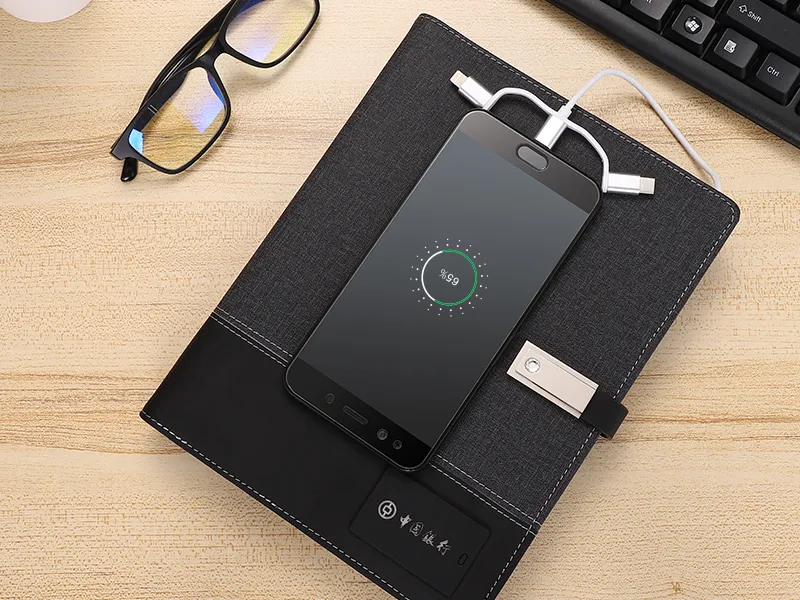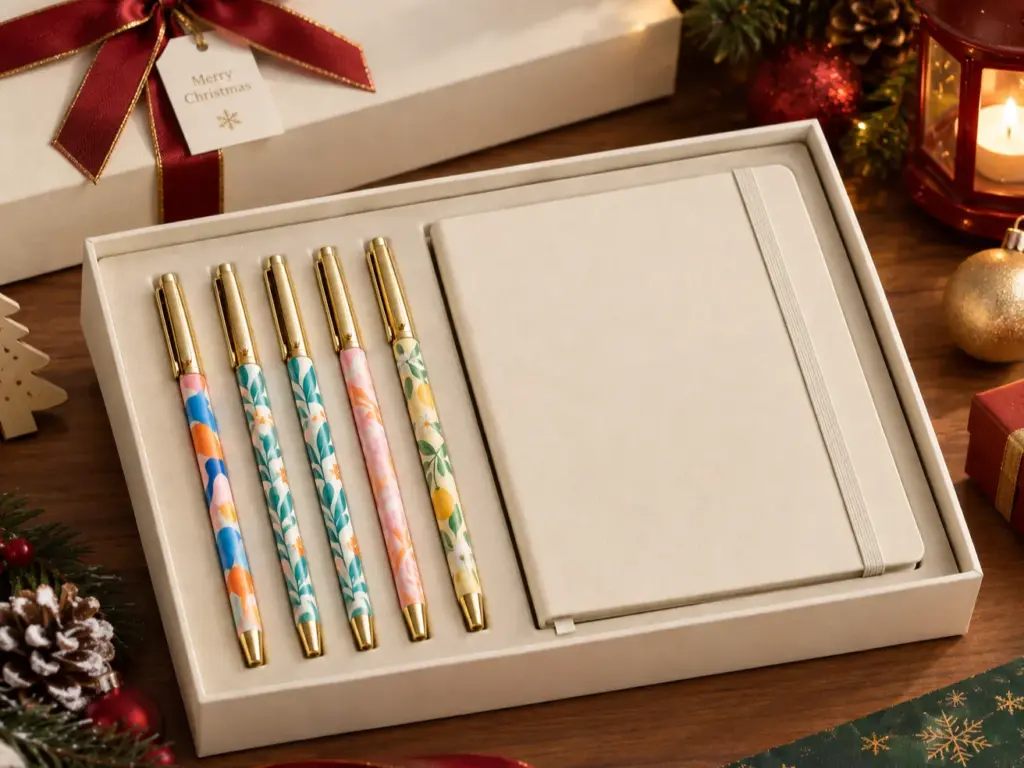
A wireless charging notebook diary combines a dated or undated planner with a wireless charging function. For corporate gifting projects, the main challenge is choosing a design that works as a practical diary while meeting requirements for branding, usability, and electronic functionality.
The right specification depends on how recipients will use the diary, when it will be distributed, and how much customization the project requires. Page layout, binding, cover design, charging configuration, and packaging all affect the final product.
This guide focuses on the decisions buyers need to make when sourcing customized wireless charging notebook diaries, from selecting the interior layout to approving a pre-production sample.
What Makes a Wireless Charging Notebook Diary Different?
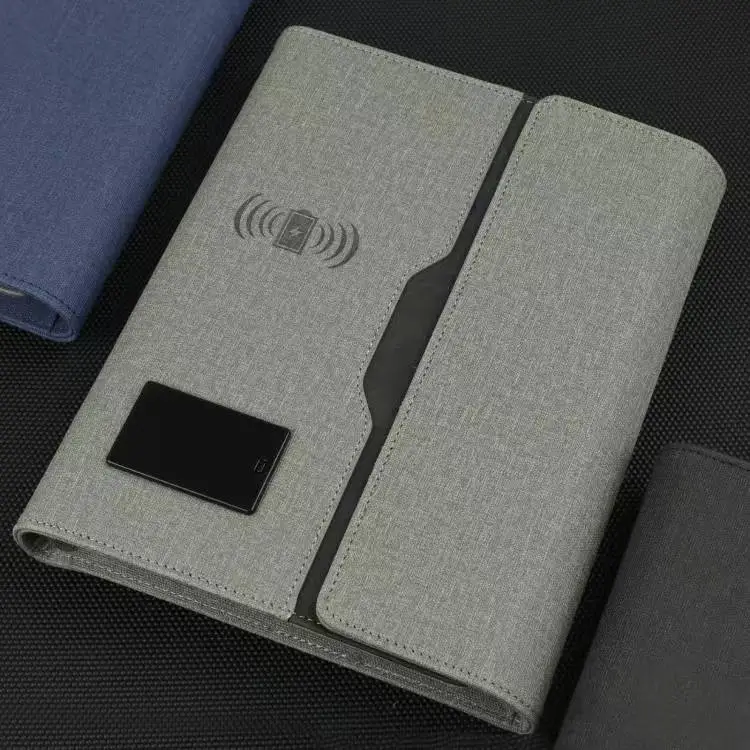
Unlike a general-purpose notebook, a diary is designed to help users organize dates, appointments, tasks, and schedules. Its interior layout therefore plays a central role in product selection.
Depending on the model, a wireless charging diary may combine planning pages with a charging module, along with features such as a pen loop, card slots, or a phone stand. The available configuration varies by supplier and product design.
Buyers should distinguish between the diary’s stationery features and its electronic components. The interior determines how users plan their work, while the charging system introduces additional requirements for device compatibility, power supply, and product testing.
If the project does not require dated planning pages, a general wireless charging notebook or a Powerbank-Notebook may be worth considering. These products can serve related purposes but should be evaluated according to their actual construction and power configuration.
How to Choose the Right Wireless Charging Diary Layout
The page layout should be one of the first decisions in a custom diary project. It affects the recipient’s daily experience, the design of the printed pages, and the timing of the order.
Dated vs. Undated Diary Pages
Dated diaries include calendar information for a specific year or period. They suit annual planners, year-end corporate gifts, and programs in which the products will be distributed at a planned time.
| Layout Type | Best Suited For | Key Consideration |
|---|---|---|
| Dated Daily | Users who record detailed daily schedules and notes | Requires careful calendar verification before printing. |
| Dated Weekly | Users who prefer to review appointments and tasks across a week | Balance weekly overview space with room for notes. |
| Undated Daily or Weekly | Flexible-use planners and ongoing gifting programs | Check how the blank date fields are designed. |
| General Note Pages | Users who need writing space alongside planning features | Confirm whether the diary retains enough calendar functionality for its intended purpose. |
These are general layout categories. The actual page formats available depend on the selected product.
Consider the Diary’s Distribution Date
For annual gifting projects, the intended distribution date should guide the page design.
A diary featuring a specific year’s calendar needs to be finalized early enough for artwork review, sample approval, production, and delivery. If the order will be distributed across different periods, an undated layout may reduce the risk of recipients receiving a diary whose calendar period has already passed.
Before requesting a quotation, confirm the intended year, language, holiday requirements, week-start convention, and any company-specific planning pages. These details should be approved before printing.
How Do Size and Binding Affect the Design?
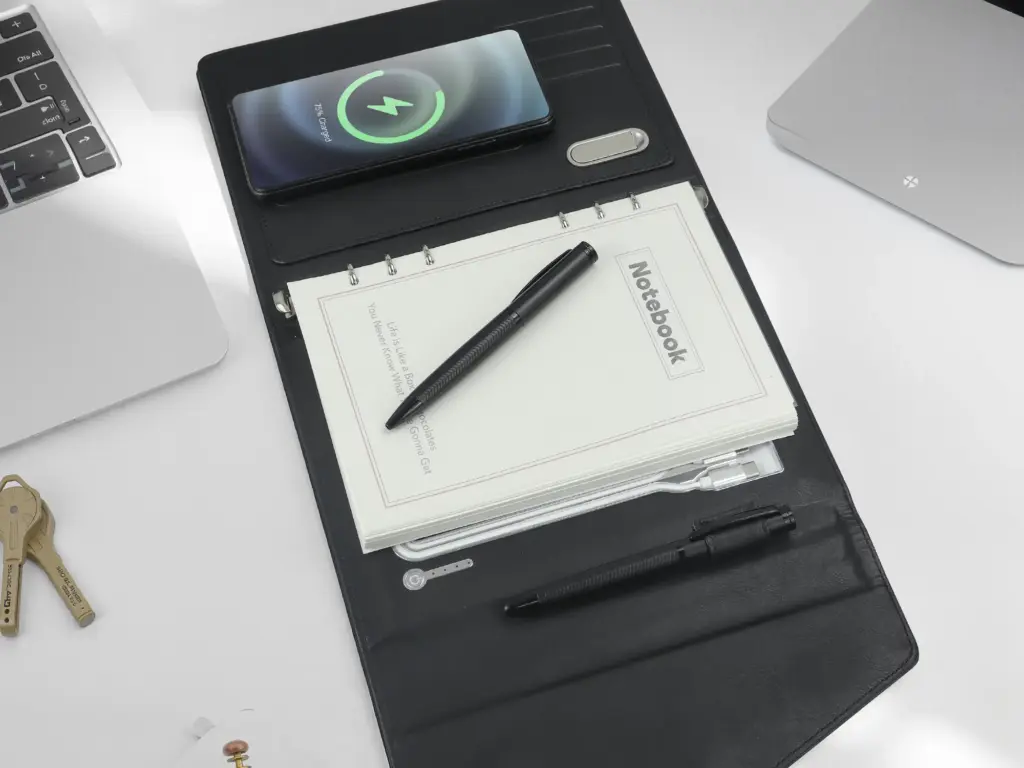
Notebook size and binding influence writing comfort, portability, and the space available for the charging components.
Selecting a Suitable Size
A5 diaries generally provide more room for daily schedules, meeting notes, and weekly planning. They may suit desk-based use or business gifts intended for regular office work.
A6 diaries are more compact and may appeal to recipients who carry a planner while traveling or moving between meetings. Jedoch, the smaller format limits the available writing area and may constrain the placement of additional features.
The best size depends on the intended use rather than a universal preference. Buyers should confirm the finished dimensions, page count, cover thickness, and placement of the charging area for the actual model.
Choosing the Binding Method
Binding affects how the diary opens, how pages turn, and whether the interior can be replaced.
- Glued binding: A conventional format for bound diaries. Buyers should inspect the binding strength and page attachment.
- Spiral binding: Allows pages to turn easily and may help the diary lie flat when open.
- Refillable ring binding: Allows page inserts to be replaced when the product is designed for refills.
For a diary intended for repeated use, refillable binding may be worth considering. Jedoch, buyers should confirm that the refill system is compatible with the cover and that the electronic components can continue to be used as intended.
For wireless charging models, the binding and cover design should be assessed together. The final sample should represent the intended construction so that buyers can review the product’s overall usability before mass production.
How to Customize a Wireless Charging Notebook Diary
Customization should begin with the recipient’s needs and the project’s budget, rather than adding as many features as possible. Every additional design requirement should have a clear purpose.
Cover Material and Logo Placement
Cover materials influence the diary’s appearance, feel, and suitability for different branding methods. PU leather and fabric are possible options, depending on the model.
Logo applications may include debossing, foil stamping, or printing. The appropriate method depends on the cover material, artwork, and desired finish.
For a charging diary, logo placement also needs to account for the designated charging area, closures, and other structural features. Buyers should review the proposed layout before approving the sample.
Custom Interior Pages
Interior customization can make a diary more relevant to a specific company or campaign. Depending on the supplier’s capabilities, options may include branded introductory pages, company information, planning templates, and printed messages.
Before confirming a custom layout, clarify the page count, paper specification, printing requirements, and whether the design affects the minimum order quantity or production schedule.
Dated pages require particular care. Calendar details, language, holidays, and week-start conventions should be checked before the artwork is approved for production.
Additional Features and Packaging
Features such as card slots, document pockets, pen loops, and phone stands can be useful, but they should support the intended use of the diary.
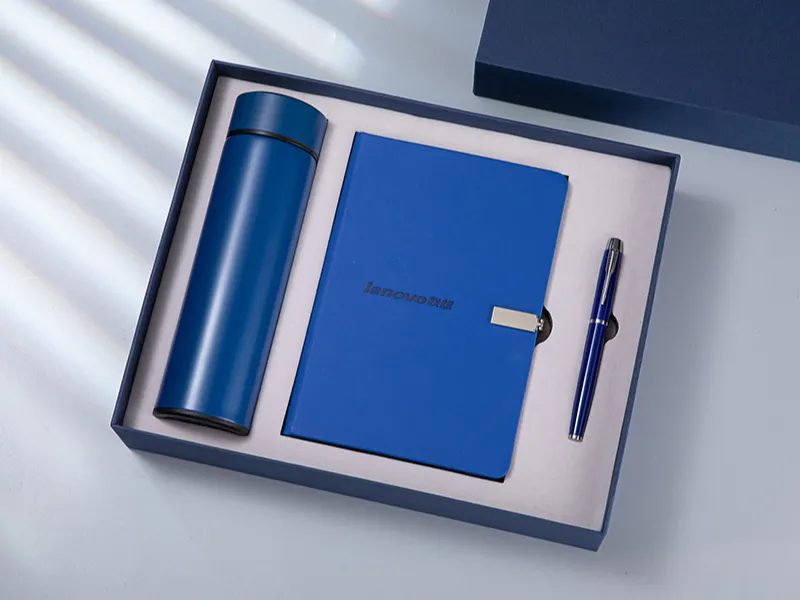
Packaging should be planned alongside the product design. A customized gift box or printed sleeve can create a coordinated presentation, while extra materials and structural requirements may affect cost and shipping volume.
If the diary will be included in a larger gift package, consider how it fits with the other items before finalizing dimensions and packaging specifications.
What Should Buyers Check About the Charging Function?
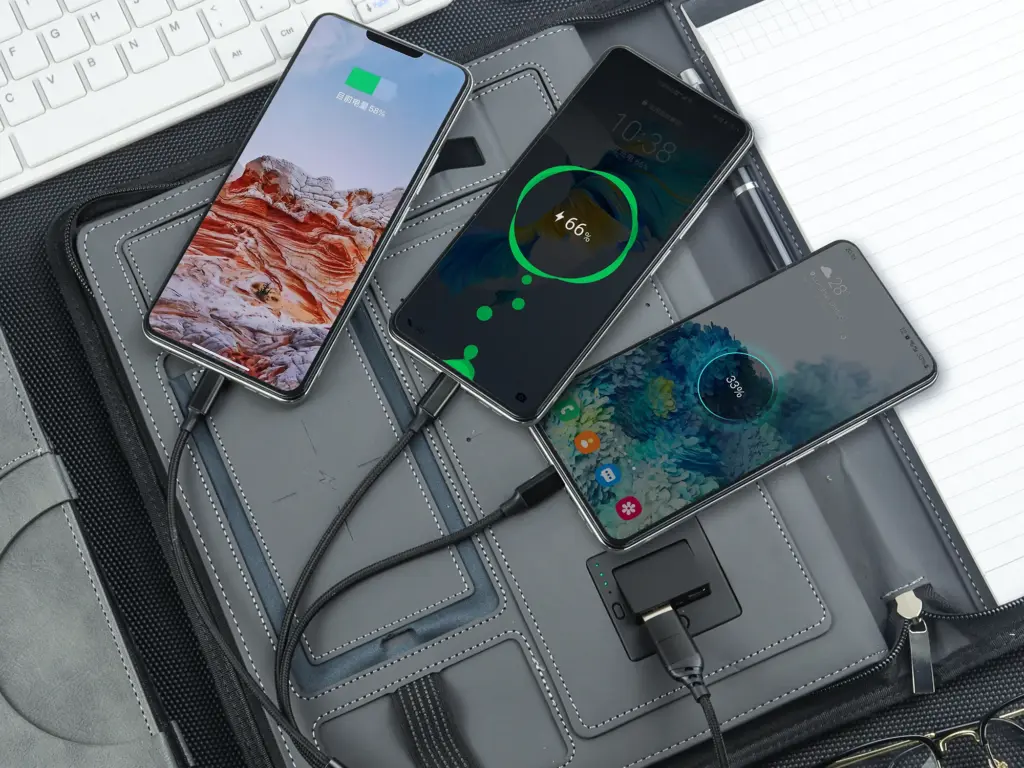
The charging system needs to be evaluated separately from the diary’s appearance and page design. Product configurations differ, so buyers should request specifications for the exact model rather than rely on generic descriptions.
Before approving a sample, confirm the following:
- Wireless charging compatibility: Which compatible devices and charging standards does the model support?
- Power source: Does the product require an external power supply, include a built-in battery, or use another configuration?
- Charging specifications: What input and output specifications are stated for the actual model?
- Positioning requirements: Where should the phone be placed, and are there any operating instructions or limitations?
- Included accessories: Which cables, adapters, or other accessories are included in the quoted configuration?
- Applicable documentation: Which compliance and transport documents are available and relevant to the selected product?
Test the sample with compatible devices and follow the supplier’s instructions. Check that the charging function works as specified and that the diary remains practical to open, write in, and carry.
If the selected model contains a lithium battery, discuss applicable transport documentation and shipping requirements with the supplier or logistics provider. Requirements depend on the battery, product configuration, destination, and shipping method.
How to Plan a Custom Diary Order
For customized wireless charging diaries, the schedule should be based on the final delivery date and the amount of design work required.
A practical process is to confirm the specification first, review the artwork, test a sample, and approve the production details before placing the bulk order.
Le-tian Gifts has previously indicated approximate sampling times of 5–10 days and notebook production times of 10–15 days after sample approval. These are reference estimates, not guaranteed lead times. Buyers should reconfirm the schedule based on the selected model, Menge, customization requirements, and current production capacity.
Before requesting a final quotation, prepare the following information:
- Quantity and delivery requirements: Include the order quantity, destination, and required in-hand date.
- Diary specification: State the size, dated or undated layout, binding preference, and any required interior pages.
- Branding requirements: Provide the logo artwork, preferred application method, and cover design requirements.
- Charging requirements: Identify the intended product configuration and any device compatibility requirements.
- Packaging details: Specify whether standard packaging or customized gift packaging is required.
Once the specification is agreed upon, request a sample or mockup as appropriate. Review the actual product, printed content, branding, charging function, and packaging before approving mass production.
What to Include in a Supplier Quotation
A quotation should make it clear what is included in the proposed diary configuration. Comparing unit prices alone can lead to an incomplete assessment when different suppliers quote different materials, electronic components, or customization services.
Ask the supplier to specify:
- The model and complete product configuration
- Cover material, size, binding, and page specifications
- Charging components and included accessories
- Logo application and interior printing costs
- MOQ and any sample or setup charges
- Packaging specifications
- Production lead time and delivery arrangements
- Applicable quality requirements and available compliance documents
If the project requires extensive customization, confirm which changes affect the price or MOQ. Zum Beispiel, a custom interior, a different cover construction, and special packaging may have separate cost and production implications.
The quotation should match the approved specification so that the product supplied in bulk can be checked against the agreed requirements.
Why Choose Le-tian Gifts for Customized Diary Projects?
Le-tian Gifts supplies promotional writing instruments, Notizbücher, Geschenksets, and related corporate gift products. The company traces its roots to the mid-1990s and was formally incorporated in 2010.
For a customized wireless charging notebook diary project, buyers can discuss the intended quantity, diary layout, cover branding, charging configuration, and packaging requirements with the supplier.
Before placing a bulk order, confirm the available model, Anpassungsmöglichkeiten, Mindestbestellmenge, sample arrangements, production schedule, and applicable product documentation.
To discuss a customized diary project, visit Le-tian-Geschenke.
Häufig gestellte Fragen
Should I Choose a Dated or Undated Wireless Charging Diary?
Choose a dated diary when the product is intended for a specific calendar year and distribution period. An undated diary offers more flexibility when products will be distributed at different times or used without a fixed start date.
Can I Customize the Interior Pages of a Wireless Charging Diary?
Interior customization depends on the selected model and supplier capabilities. Possible options include branded introductory pages, planning layouts, and printed company information. Confirm the available formats, printing specifications, Mindestbestellmenge, and production implications before approval.
What Should I Check Before Approving a Sample?
Review the page layout, printing accuracy, binding, cover material, logo finish, charging performance, included accessories, und Verpackung. The sample should represent the intended production specification as closely as possible.
Does Every Wireless Charging Diary Include a Built-In Battery?
NEIN. The power configuration depends on the specific model. Buyers should confirm whether the product requires an external power source or includes a battery, along with the applicable charging specifications.
What Information Is Needed for a Bulk Quotation?
Provide the required quantity, delivery date and destination, preferred diary layout, size, cover material, logo artwork, charging requirements, and packaging preferences. These details help the supplier evaluate the requested configuration and provide a more relevant quotation.
How Early Should I Order Dated Corporate Diaries?
Begin sourcing early enough to finalize the calendar layout, review the artwork, approve the sample, complete production, and arrange shipping before distribution. The exact lead time depends on the product, customization requirements, Menge, and delivery destination.