Перейти к содержимому



When people ask, “Where are BIC pens manufactured?”, they are usually thinking about the iconic BIC Cristal pen—the simple, affordable ballpoint pen that has become one of the best-selling products in history.
The short answer is: BIC pens are made in several countries, including France, Мексика, Бразилия, Spain, и Индия.
BIC operates its own factories and follows a strict “Made in BIC” philosophy. This means the company controls production directly instead of relying heavily on outside suppliers.
For distributors, wholesalers, and promotional gift buyers, BIC is a powerful example of how large-scale manufacturing and consistent quality can build a global brand. At the same time, many companies looking for more flexible customization turn to specialized manufacturers like Ле-тянь подарки for lower MOQs and broader branding options.
The BIC Cristal: A French Revolution in Writing
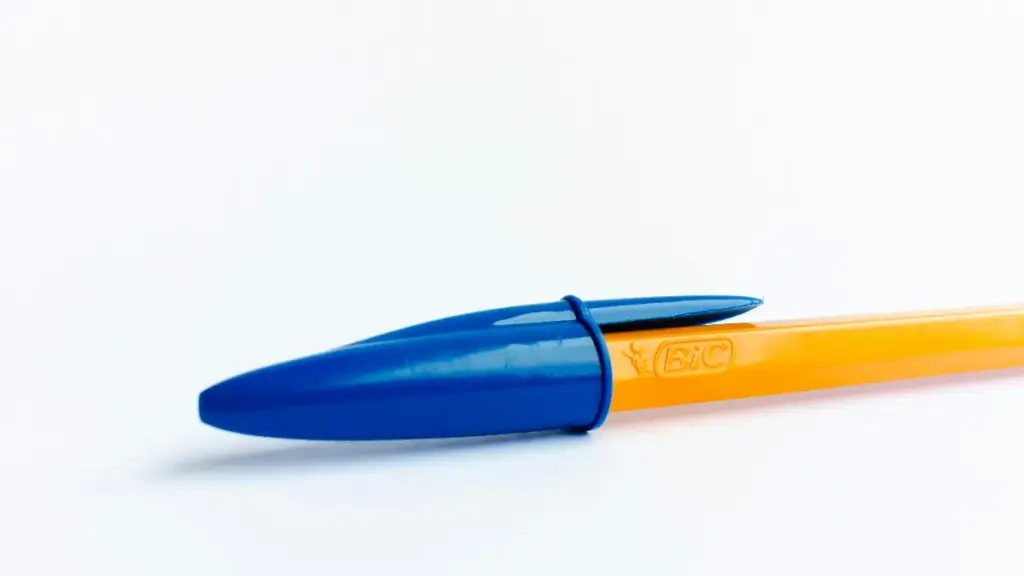
The BIC Cristal transformed the global writing instrument market by merging French precision engineering with high-volume, low-cost manufacturing to sell over 140 billion units worldwide.
Brand Origins and French Heritage
Marcel Bich and Édouard Buffard founded Société BIC in 1945 in Clichy, a suburb of Paris. They identified an opportunity to shift writing instruments from expensive, maintenance-heavy fountain pens into reliable, low-cost mass production items. Bich acquired László Bíró’s original ballpoint patent and refined the design using precision Swiss watchmaking tools. The resulting BIC Cristal, launched in 1950, relied entirely on internal French engineering and manufacturing capabilities. This localized expertise established the foundation for the company’s vertically integrated production model.
The Marne-La-Vallée Manufacturing Hub
The Marne-La-Vallée facility remains a central pillar of BIC’s French operations. Covering 28,000 square meters of factory space, this plant operates across three distinct technological sectors designed to keep all core component production in-house:
- Point (Metallurgy): Shapes tungsten carbide balls and stamps raw brass into precision tips.
- Ink (Chemistry): Formulates and mixes proprietary oil-based inks with strict viscosity controls.
- Plastic Processing: Injects thermoplastic pellets into multi-cavity molds for barrels and caps.
BIC’s “Made in BIC” Philosophy: A Global Network of Factories
BIC rejects contract manufacturing in favor of complete vertical integration, operating over 25 global factories to output 23.7 million standardized products daily with strict micron-level precision.
The Core of the “Made in BIC” Model
The foundation of the “Made in BIC” model relies entirely on complete vertical integration. BIC explicitly avoids outsourcing its core production to independent contract manufacturers. Instead, the company designs and operates unique, proprietary machinery built specifically for its own writing instruments. This internal control allows engineers to maintain extremely tight manufacturing tolerances across billions of identical units.
Managing operations in-house gives BIC the authority to control quality at an industrial scale. Factory operators optimize raw material usage at every step of the process, ensuring these highly standardized writing instruments remain cost-effective without sacrificing reliability.
Scale and Output of the Manufacturing Network
The industrial footprint required to support this strategy operates at massive volume. BIC dedicates its infrastructure to its core product categories of writing instruments, lighters, and shavers.
- Global footprint: The network consists of over 25 company-owned factories worldwide.
- Daily output: Facilities manufacture 23.7 million products every single day across all categories.
- Cumulative milestones: Continuous production has enabled the sale of over 100 billion BIC Cristal pens alone.
This aggressive daily output powers an immense global distribution footprint. Retailers and institutions rely on this steady stream of inventory to keep shelves stocked across local and international markets.
Geographic Distribution and Regional Hubs
BIC places its factories near key consumer markets to streamline the supply chain and reduce operational bottlenecks.
- Европа: France functions as the historical center, principal production hub, and primary technology base for the flagship BIC Cristal.
- The Americas: Manufacturing assets in North and Latin America supply localized demand, keeping logistics efficient and eliminating excessive import costs.
- Africa: Recent expansions into West and Central Africa rely on localized subsidiaries to anchor supply chains directly within emerging markets.
This regional hub approach guarantees high-volume availability globally without the severe delays or high tariffs associated with long-haul ocean freight.
Benefits of Direct Manufacturing Control
| Advantage | Business Impact |
|---|---|
| Consistent Quality | Uniform writing performance worldwide |
| Cost Control | Lower production costs at high volume |
| Faster Innovation | New products can be developed quickly |
| Supply Security | Reduced dependence on third parties |
| Brand Protection | Stronger quality and safety control |
Premium Custom Corporate Gifts Delivered 20% Faster
Key Manufacturing Plants: Франция, Мексика, Бразилия
BIC operates a decentralized global network. France drives R&Д, Mexico serves as the largest high-volume hub, and Brazil manages diversified regional production.
| Facility Location | Core Strategic Focus | Output & Capacity | Key Distinctions |
|---|---|---|---|
| Франция | Brand origin, R&Д, European supply | Millions of units daily | NF Environment (NF400) certification |
| Мексика | High-volume North American export | Targeting 3.5B products nationwide | Largest global manufacturing center |
| Бразилия | Diversified Latin American supply | 850-employee multi-category plant | Early ESG certification in Manaus |
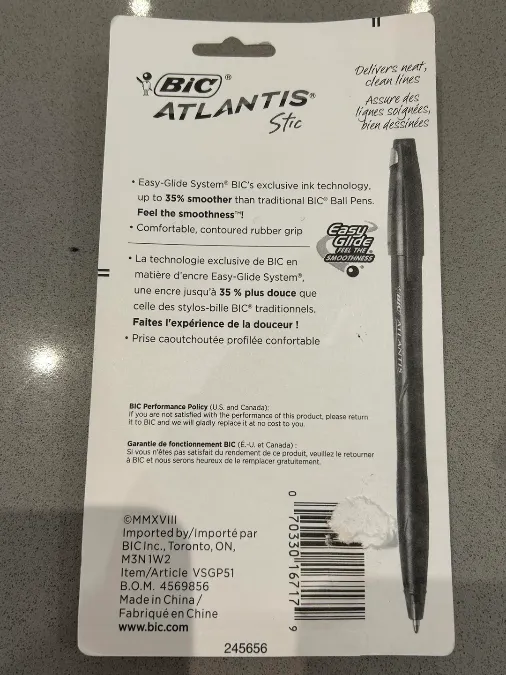
Франция: Brand Origin and European Operations
Société BIC traces its roots to Clichy. This headquarters serves as the historical origin point for the brand, where the iconic BIC Cristal pen first launched in 1950. The French facilities still anchor the company’s global identity.
Сегодня, France manages product design, brand development, and European regional manufacturing. The engineering teams here set the technical standards that all other global factories follow. French plants also lead critical sustainability initiatives, securing the NF Environment (NF400) eco-label certification for their writing instruments.
Мексика: Primary Global Manufacturing Center
Mexico represents the largest manufacturing center globally for BIC. The company relies on major facilities in Ramos Arizpe and the State of Mexico to handle massive production quotas for the Americas.
- Output Capacity: The expanded Coahuila plant achieves an output capacity of 1.5 billion units.
- National Target: BIC aims to hit 3.5 billion products annually across its Mexican operations.
- Logistics Strategy: The facilities leverage proximity to the US border to efficiently export high volumes of writing instruments across North America.
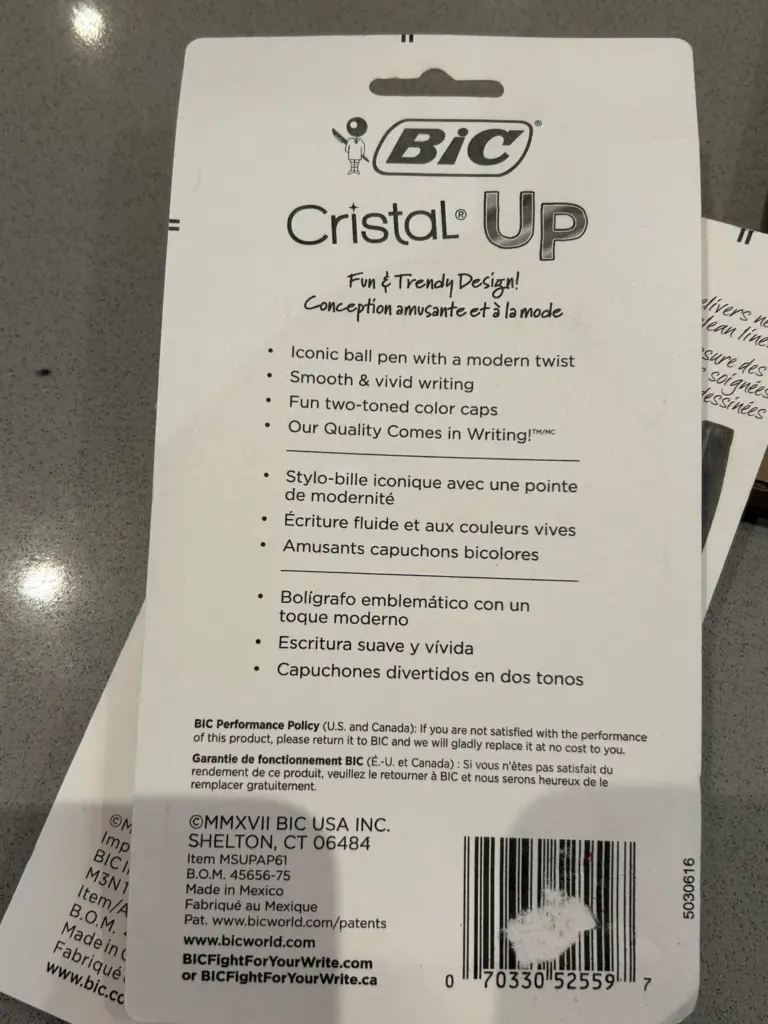
Бразилия: Multi-Category Production in Manaus
The Brazilian operations center on a strategic 850-employee facility located in Manaus. This plant uses a unique production model tailored to regional market dynamics.
Other Manufacturing Locations
BIC also operates or has operated facilities in:
- Spain
- Greece
- Tunisia
- Индия
This global network allows the company to serve customers in more than 160 countries.
The Technology Inside a Simple BIC Pen
The BIC Cristal combines precision metallurgy, engineered fluid dynamics, and structural safety to deliver over two kilometers of continuous ink in a high-volume disposable format.
Outer Barrel and Pressure Equalization
The hexagonal polystyrene barrel mimics the shape of a classic wooden pencil. This geometry provides an anti-roll grip on flat surfaces and delivers rigid mechanical protection for the thin inner ink tube.
A tiny hole drilled midway down the barrel serves a critical mechanical function: it equalizes internal and external air pressure. This precise pressure balance prevents vacuum lock from forming inside the pen. Maintaining ambient pressure ensures a continuous fluid flow toward the tip without forcing ink out of the open end.
The Precision Tip and Ball Mechanism
The writing point relies on a heavy-duty tungsten carbide ball. Technicians grind and polish this component using diamond abrasives to achieve a spherical accuracy of 0.1 μm. A brass holder surrounds the ball, acting as a specialized bearing seat. This housing maintains a microscopic capillary gap between the metal seat and the ball.
As the ball rotates across a surface, it functions as a rolling-seal system. The inward-facing side picks up fluid from the internal reservoir, while the outward-facing side deposits that ink cleanly onto the paper. This mechanism naturally seals the pen when not in use, preventing evaporation and leaks.
Ink Chemistry and Fluid Dynamics
BIC engineers utilize a highly viscous, oil-based ink formulation. This specific chemistry prevents the ink from feathering on porous paper and stops the metallic ball from clogging over time. Inside the plastic connection piece, narrow internal channels rely entirely on capillary forces to draw fluid steadily from the extruded inner cartridge.
This controlled fluid delivery system minimizes material waste. It restricts the flow rate just enough to allow a single disposable pen to write a continuous line extending over two kilometers.
Structural Safety and Sealing Components
Manufacturers incorporate several physical safety and sealing features directly into the pen’s structural components to meet global compliance standards. The assembly includes three primary defense mechanisms:
- Polypropylene Cap: Incorporates a standardized airflow hole designed to reduce suffocation risks if swallowed accidentally by children.
- Flush End Plug: Seals the rear of the outer housing to permanently trap fluid inside if the internal ink tube sustains physical damage.
- Hollow Conical Geometry: Fits securely inside the cap over the connection piece to shield the sensitive metal tip and limit air exposure.
Is BIC a Good Choice for Custom Branded Pens?
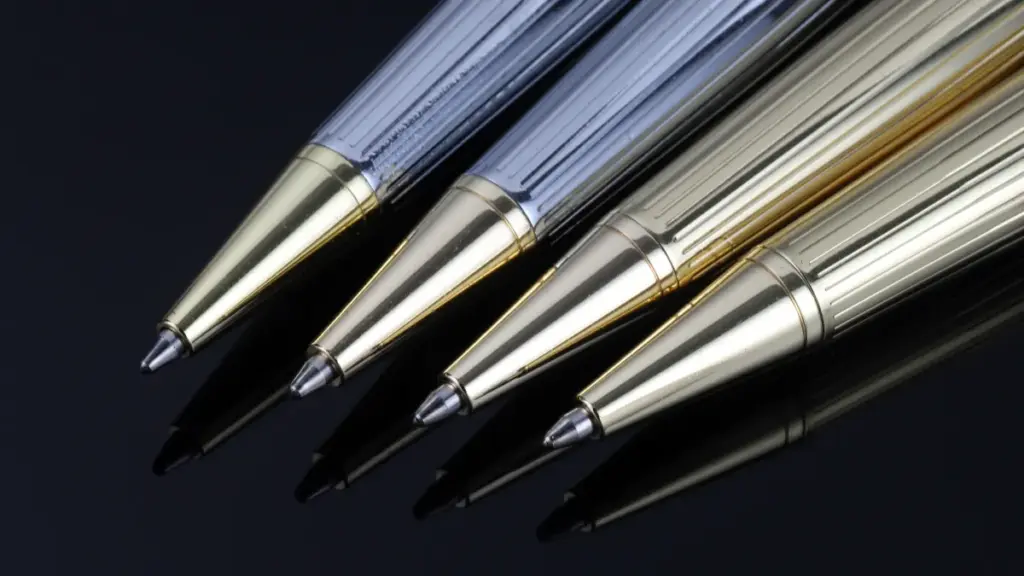
BIC is a highly reliable choice for custom branded pens when you need mass-market recognition and high-volume consistency. It falls short only for premium, highly customized luxury campaigns.
Core Strengths for Promotional Campaigns
The primary advantage of a BIC pen lies in its industrial consistency. When you order thousands of units, you expect every single one to write flawlessly right out of the box.
- Mass-market recognition: Recipients instantly recognize and trust the BIC brand, increasing the likelihood they will keep the pen.
- Global manufacturing scale: BIC handles massive, high-volume orders easily without the supply chain disruptions common with smaller factories.
- Built-in quality controls: Company-owned factories adhere to strict international standards to ensure reliable ink flow and structural durability.
- Broad product range: Multiple models exist to fit varying budgets and specific promotional needs.
Ideal Use Cases and Applications
You want to deploy BIC pens where volume and practicality matter more than luxury positioning. They excel in environments where pens frequently change hands.
- Corporate giveaways: Perfect for high-traffic trade shows where you need to distribute maximum units to attendees.
- High-volume retail promotions: Effective for event swag bags and mass consumer outreach.
- Budget-conscious campaigns: Offers a very low unit cost while maintaining brand credibility.
- Educational programs: Practical tools for schools, universities, and large corporate office supply distribution.
Limitations and Design Considerations
Standardized mass production brings a few trade-offs. The exact traits that make BIC affordable also limit its use for boutique branding.
- Lack of exclusivity: Because BIC pens are ubiquitous everyday items, they do not convey a high-end or rare feel.
- Constrained print area: Complex, wrap-around custom designs are difficult to apply to standard barrel shapes.
- Volume requirements: The economics make sense for large batch orders, but they are less suited for small boutique runs.
- Lower perceived value: They function as utility tools, not upscale writing instruments intended to impress VIP clients.
When to Consider Alternative Brands
A BIC pen is not a universal solution. Depending on your specific marketing objectives, you may need to source from specialized manufacturers.
- Premium corporate gifting: Look elsewhere if your campaign targets executives or requires heavy, luxury positioning.
- Eco-focused branding: Campaigns heavily leaning into sustainability often require raw bamboo, recycled kraft paper, or specialized refillable materials.
- Highly customized aesthetics: If your brand identity demands unusual barrel shapes, custom heavy metal finishes, or unique presentation packaging, an alternative OEM pen factory is a better fit.
How to Source Reliable Custom Pen Orders in China
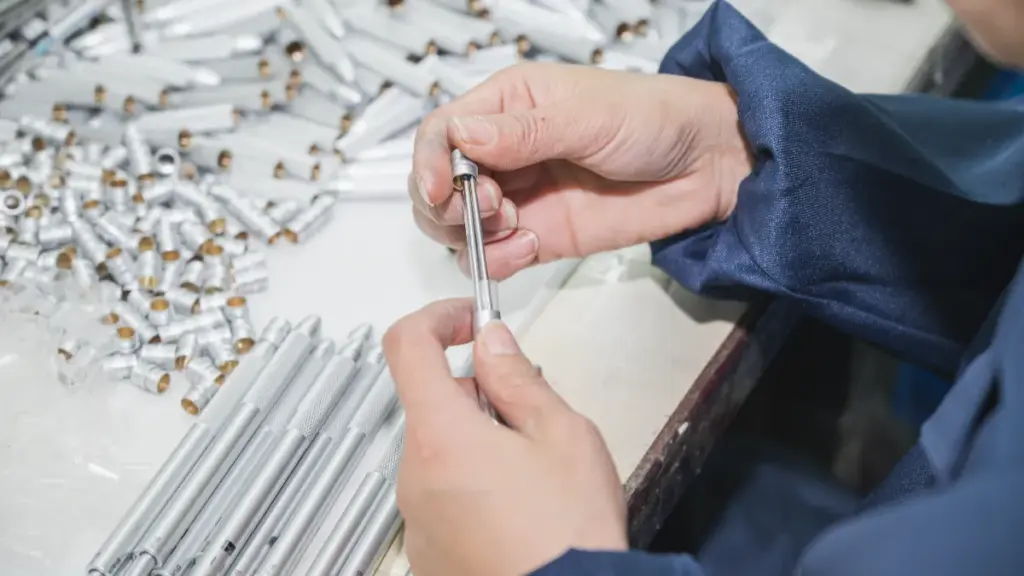
Sourcing custom pens in China requires matching your order volume with the right supplier model, targeting specific manufacturing clusters, and executing rigorous quality control to avoid costly failures.
Select the Appropriate Sourcing Model
Your procurement strategy dictates your cost structure and level of production oversight. Choosing the right partner depends entirely on your order volume and familiarity with cross-border trade.
- Direct factories: Deliver the lowest per-unit costs and absolute control over recurrent, large-scale custom OEM projects.
- Trading companies: Offer lower minimum order quantities (MOQs) and broad product selections, ideal for small promotional tests.
- Sourcing agents: Guide first-time buyers through factory selection, local negotiations, and physical market visits.
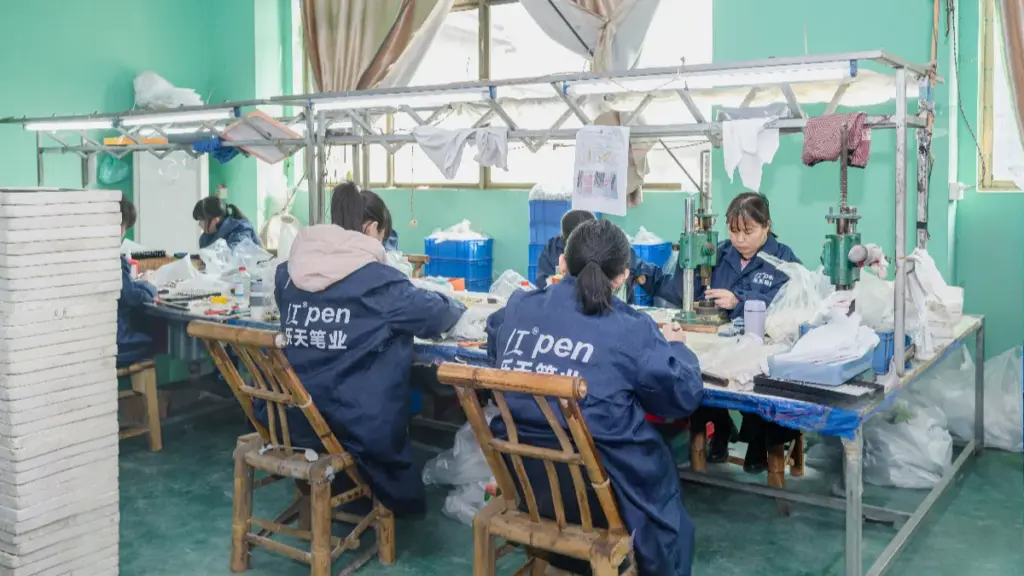
For buyers who want the cost advantages of working directly with a factory without the complexity of managing multiple suppliers, Le-tian Gifts offers flexible customization with minimum order quantities starting from just 100 единицы. We welcome distributors, importers, and corporate gift buyers to visit our factory and see our production process, quality control system, and sample showroom in person.
Target Specific Manufacturing Clusters
China does not have one centralized pen factory. Production happens in specialized regional clusters, with each city serving a completely different quality and price tier.
- Ningbo: Operates as a mature export base with highly efficient logistics for mass-market ballpoint pens and bulk packaged sets.
- Tonglu and Jinxian: Specialize in mid-to-higher tier promotional pens, guaranteeing stable performance and consistent ink flow.
- Yiwu International Trade City: Centralizes high-variety, ultra-low-cost options in one physical location, requiring buyers to heavily scrutinize product quality.
Evaluate Supplier Export Experience and Certifications
A cheap quote carries high risk if the supplier cannot meet your market’s regulatory standards. You must actively vet the factory’s operational history and internal quality systems before authorizing production.
- Export history: Prioritize suppliers actively shipping to regions with strict safety, labeling, and performance expectations.
- Compliance certifications: Verify actual documents for quality management (ISO9001, ISO14001) and social compliance (BSCI or SEDEX).
- In-house capabilities: Audit their facilities for automatic assembly lines, active ink testing labs, and OEM engineering support to handle custom molds.
Define Clear Product Specifications
Chinese factories build exactly what you specify. If you leave a detail out, the factory will default to the cheapest available option. Lock down every variable in a comprehensive Product Requirement Sheet (PRS).
- Ink and performance targets: Define exact ink characteristics, specify a writing length target (например, 2km), and demand a precise line width.
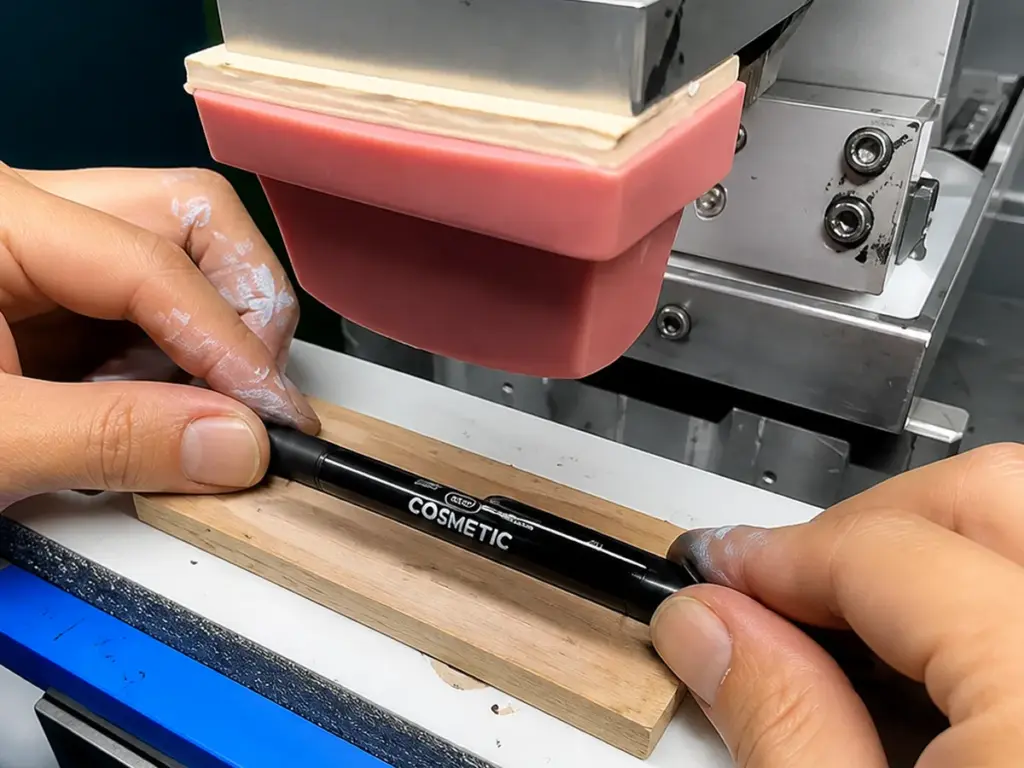
- Materials and branding: Detail the exact barrel plastics (АБС, ПП) or metals, and set strict rules for logo application methods like pad printing or UV digital printing.
- Packaging requirements: State whether the order ships in bulk polybags or individual custom-printed retail boxes to prevent transit damage.
Implement Pre-Production and Post-Shipment QC
Quality control is a continuous feedback loop that protects your brand reputation. Establish strict inspection checkpoints before, during, and after the manufacturing run.
- Pre-production samples (PPS): Demand physical units to test writing smoothness, clip strength, and leakage risks over several days.
- Third-party inspections: Hire independent inspectors for large runs to check logo clarity, barrel color accuracy, and assembly tolerances before the container ships.
- Post-shipment tracking: Test random cartons upon delivery and track failure rates to continuously upgrade your specifications with the factory.
Why Letian Gifts Offers More Customization for Your Brand
Retail brands prioritize massive output over flexibility. Letian Gifts operates an agile manufacturing model, giving you complete control over order quantities, color matching, and premium packaging.
Le-tian Gifts is one of China’s leading custom pen and corporate gift manufacturers.
With decades of manufacturing experience, the company supplies branded pens and premium gift sets to global customers including Google, DHL, BMW, Visa, and Marriott.
What Makes Le-tian Gifts Different
| Feature | BIC | Ле-тянь подарки |
|---|---|---|
| Brand Recognition | Very high | OEM/ODM focused |
| минимальный заказ | Often higher | От 100 единицы |
| Кастомизация | Standard printing | Full design customization |
| Подарочные наборы | Ограниченный | Extensive options |
| Упаковка | Standard | Luxury custom packaging |
| Product Range | Mostly pens | Ручки, блокноты, tech gifts |
Customization Options
Le-tian Gifts offers:
- Лазерная гравировка
- УФ печать
- Pantone color matching
- Custom logos
- Premium boxes
- Notebook combinations
- Executive gift sets
Fast and Flexible Service
- Samples in 5–10 days
- Production in 14–25 days
- Low MOQ starting at 100 наборы
- Global export support
If you need a branded gift solution rather than a standard promotional pen, Le-tian Gifts provides significantly more flexibility.
Заключительные мысли
BIC pens are manufactured in a global network of company-owned factories, with major production centers in France, Мексика, and Brazil. This “Made in BIC” strategy gives the brand exceptional control over quality and efficiency.
The success of BIC demonstrates an important lesson: consistent quality and scalable manufacturing create lasting brand value.
For businesses that need more than a standard logo ballpoint pen, custom ballpoint pens manufacturers like Ле-тянь подарки offer lower MOQs, broader customization, and premium corporate gift solutions tailored to your brand.
Whether you want a simple promotional pen or a luxury executive gift set, choosing the right manufacturing partner can make a lasting impression on your customers.
Часто задаваемые вопросы
Is BIC a French company?
Да, BIC is a French multinational corporation. Marcel Bich and Édouard Buffard founded the company in Clichy, Франция, в 1945. Сегодня, it remains French-origin, French-headquartered, and French-listed. While BIC operates a vast global manufacturing network, it keeps corporate control, engineering standards, and brand design firmly rooted in France.
Who invented the BIC pen?
Marcel Bich invented and industrialized the iconic BIC Cristal in 1950. He did not invent the original ballpoint concept—he licensed that technology from Hungarian inventor László Bíró. Bich engineered a highly reliable, mass-producible, and low-cost plastic pen that transformed the global writing instrument industry.
Why is the BIC pen so successful?
The BIC pen dominates the market through robust simplicity, massive economies of scale, and extreme reliability. BIC manufactures its own metal balls, tips, and inks in-house. This vertical integration guarantees precise quality control while keeping unit costs low enough for universal accessibility.
How many pens does BIC make a day?
BIC manufactures millions of pens every day across its worldwide network. The company reports producing around 28 million total products daily across all categories. A single major stationery plant in Marne-la-Vallée, Франция, independently outputs about 3 million pens per day.
Why is there a hole in the BIC pen cap?
The small hole acts as a critical safety feature to reduce the risk of fatal choking. If a child or adult accidentally swallows the cap and it lodges in their windpipe, the hole allows a small amount of air to pass through. This design choice complies with strict international safety standards for small parts.
Are BIC pens bad for the environment?
Like all disposable plastic products, BIC pens carry a clear environmental footprint. They rely on petrochemical plastics, metal stamping, and a single-use design model. To offset this impact, the company focuses heavily on manufacturing efficiency, factory waste reclamation, and engineering a very long writing life—up to three kilometers of ink—to maximize the value of every pen before disposal.