콘텐츠로 건너뛰기


Sublimation pens are customized writing instruments designed for transferring full-color graphics onto specially coated pen barrels. Unlike conventional logo printing, sublimation can reproduce photographs, gradients, detailed illustrations, and other colorful artwork with a smooth, integrated appearance.
For promotional product distributors, corporate gift suppliers, and brands buying custom pens in bulk, sublimation is useful when a design needs more than a simple logo. It is especially suitable for personalized campaigns, event merchandise, school products, sports teams, and creative corporate gifts.
This guide explains how sublimation pens work, what equipment is required, where they perform best, and what buyers should consider before placing a custom pen order.
What Are Sublimation Pens in Custom Printing?

A sublimation pen is not a special type of pen refill or writing mechanism. The term normally refers to a pen with a specially coated barrel that is suitable for dye-sublimation printing.
During production, a printed transfer sheet is placed around the coated barrel. Heat and pressure cause the sublimation ink to change from a solid state into a gas. The ink then bonds with the polymer coating on the pen surface, creating the final image.
This process is different from ordinary screen printing or pad printing. Traditional printing usually places ink on top of the pen surface, while sublimation transfers dye into the suitable coating.
This makes sublimation pens a strong option when buyers need:
- Full-color logos and graphics
- Photographic images
- Gradients and detailed patterns
- Personalized names or artwork
- Wraparound designs
- Small promotional campaigns with multiple designs
The quality of the finished product depends on more than the printer. The pen barrel coating, transfer paper, 잉크, temperature, pressure, and heating time all need to work together.
How Sublimation Pens Work on Coated Pen Barrels

Sublimation printing works because the pen barrel has a polymer-based coating that can accept sublimation dye.
The general production process is:
Design → Print Transfer → Wrap Barrel → Apply Heat and Pressure → Cool → Inspect → Assemble
First, the artwork is prepared in the correct size and orientation. The design is then printed onto sublimation transfer paper using sublimation ink.
The printed paper is positioned tightly around the coated barrel. A specialized heat press or pen heat-transfer oven applies controlled heat. At the required temperature, the dye becomes a gas and penetrates the coating.
After cooling, the transferred image becomes part of the coated surface rather than sitting as a thick layer of conventional ink.
This is why ordinary plastic or metal pen barrels cannot automatically be used for sublimation. The surface needs the correct sublimation-compatible coating.
For production orders, custom pen manufacturers should also control barrel dimensions carefully. Even a small difference in diameter or coating thickness can affect how the artwork transfers.
Premium Custom Gifts From 100 단위
Sublimation Pens vs Traditional Printed Pens: Key Differences

Sublimation chemically fuses full-color art inside a polymer barrel, while traditional printing deposits surface ink or etches metal, creating distinct tradeoffs in durability, setup speed, and volume pricing.
Are you choosing between sublimation pens vs traditional printed pens for a brand launch, only to realize the technical tradeoffs of each process are poorly understood? Choosing the wrong decoration method can lead to chipping logos, muddy colors, or ballooning production costs.
| 특징 | Sublimation Pens | Traditional Printed Pens |
|---|---|---|
| 색상 | Full-color designs | Usually one or several spot colors |
| Photo printing | Suitable | Usually less suitable |
| Gradients | Excellent | Depends on printing method |
| Surface requirement | Sublimation coating required | Depends on printing technology |
| 다음에 가장 적합 | Detailed and colorful artwork | Simple logos and text |
| Customization flexibility | High for full-color artwork | High for standard branding |
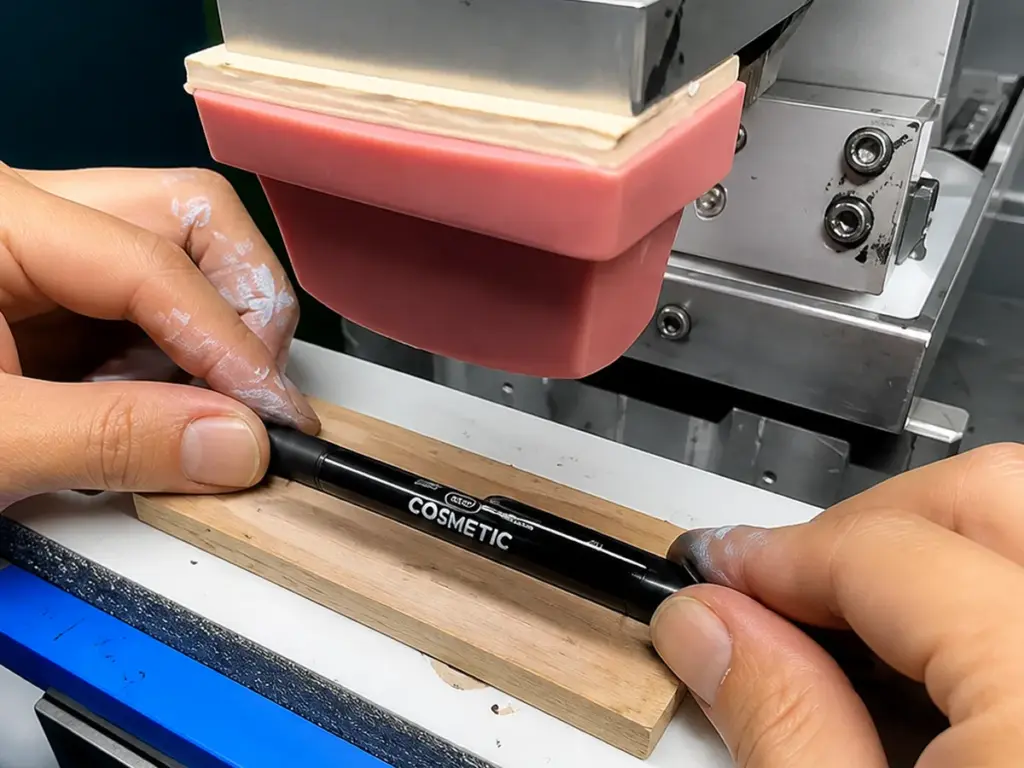
- For a simple company logo, 스크린 인쇄, 패드 인쇄, or laser engraving may be more cost-effective.
- For artwork that covers a large part of the barrel, sublimation can offer a stronger visual effect.
Core Printing Technology and Chemical Processes
How the ink actually attaches to the pen determines its chemical stability and manufacturing steps. Sublimation and traditional printing run on completely opposite physical mechanics.
- Sublimation Bonding: Heat and pressure force sublimation dye to transition directly from a solid to a gas, permanently bonding the artwork inside the pores of a specialty polymer-coated barrel.
- Mechanical Depositing: Traditional methods use silicone pads, mesh screens, or UV inkjet heads to apply wet or cured ink directly on top of an uncoated plastic or metal surface.
- Disassembly Requirements: Sublimation requires disassembling the pen completely to shield the spring, ink cartridge, and plastic mechanisms from oven heat, while traditional printers apply designs directly to fully assembled pens.
내구성, Wear Performance, and Lifespan
Writing instruments live in pockets, bags, and high-friction grip zones. Under these daily conditions, the physical wear characteristics of the print become highly evident.
- Integrated Graphics: Sublimation designs do not peel, crack, or flake because the color molecules reside inside the polymer layer rather than sitting on top as a film.
- Surface Vulnerability: Pad and screen-printed surface inks eventually chip, scratch, or wear away under constant thumb friction and pocket abrasion.
- Engraving Tradeoff: Traditional laser engraving offers permanent durability on metal barrels, but it remains strictly monochrome and cannot support colorful artwork.
Design Freedom, Color Quality, and Personalization Potential
Modern marketing demands vivid color, complex geometries, and highly targeted personalization. The choice of hardware can either expand or restrict your creative options.
- 360-Degree Wraps: Sublimation handles continuous gradients, photography, and full-bleed graphics that wrap entirely around the barrel with minimal seam visibility.
- Spot Color Constraints: Pad and screen systems restrict artwork to flat, solid spot colors inside a highly confined rectangular imprint zone.
- Variable Data Ease: Personalizing individual pens with custom QR codes, employee names, or sequential numbering is a simple print-job update in sublimation, whereas traditional printing setups make individual variations financially unfeasible.
Production Workflows, Cost Structures, and Order Scalability
The right choice ultimately comes down to your production volume and budget allocation. The labor-to-machinery ratio is completely inverted between these two systems.
- Manual Touchpoints: Sublimation requires operators to print transfer paper, trim, wrap, tape, apply shrink sleeves, bake, peel, and reassemble each pen, driving up per-unit labor.
- High-Speed Automation: Industrial pad or screen lines run thousands of pens per hour through automated feeders with virtually zero hands-on labor per unit.
- Scalability Inflection Point: Sublimation shines in small-batch runs and personalized high-value gifts, while traditional automated printing offers rock-bottom pricing for massive giveaways.
Traditional automation dominates massive giveaways where unit cost is the driving metric, but sublimation has carved out a highly profitable niche for bespoke, high-impact branding projects.
What Equipment Is Needed for Sublimation Pen Production?
Setting up a sublimation pen production line requires a precise mix of high-resolution digital printing tools, cylindrical heat application hardware, and surface prep consumables.
Are your custom pen transfers coming out blurry, faded, or misaligned? Securing the correct hardware and consumables for sublimation pen production is the only way to prevent high reject rates and ensure crisp, 360-degree graphics.
Digital Design and Printing Systems
The transfer is only as sharp as the initial print. Digital precision remains non-negotiable when dealing with such small, highly visible substrates.
- Graphic design software: Programs like Adobe Illustrator, CorelDRAW, or Canva must scale, layout, and horizontally mirror pen barrel artwork at a minimum of 300 DPI to avoid pixelation.
- Dedicated sublimation printer: A specialized printing system loaded exclusively with dye-sublimation ink sets designed for thermal activation.
- Sublimation transfer paper: Coated paper formulated to hold high ink loads and release dyes evenly under intense heat.
Sublimation Pen Blanks and Preparation Consumables
Physical pen preparation determines the durability of the final product. Skipping prep steps directly causes transfer voids and print defects.
- Polyester-coated metal pen barrels: Blanks engineered to withstand temperatures up to 400°F while receiving the gasified dye.
- Heat-resistant polyimide tape: High-temperature tape used to lock the transfer paper tightly against the barrel without melting or leaving sticky residue.
- Heat-shrinkable sleeves: Plastic sleeves that apply uniform compressive pressure around the cylinder, eliminating air gaps.
- Cleaning supplies: Isopropyl alcohol and lint-free wipes to clean grease, oils, and dust from the metal surface before wrapping.
Heat Transfer Equipment Options
Curing the design requires stable, controlled thermal energy. You have two main hardware paths depending on your throughput goals.
- Convection sublimation ovens: Mini ovens equipped with accurate temperature and timing controls to bake multiple pens simultaneously.
- Pen heat press machines: Mechanical presses featuring custom cylindrical heating elements to apply direct physical contact and heat.
- Silicone mats or wire racks: Supportive, heat-safe barriers used to organize and separate pen barrels inside an oven so the sleeves do not melt together.
Wrapping, Alignment, and Safety Support Tools
Auxiliary tools protect your staff and keep your production line running without costly manual errors.
- Handheld heat guns: High-velocity heating tools to shrink plastic wraps tightly over the paper-covered barrel.
- Mechanical alignment jigs: Physical clamps to secure templates and ensure perfectly straight paper seams.
- Heavy-duty heat-resistant gloves: Thermal protection for handling hot metal components and peeling away wraps immediately after baking.
- Ventilation systems: Local exhaust fans or exhaust hoods to pull chemical fumes and gasses away from the operator’s breathing zone.
Standardizing your machinery and prep tools guarantees that designs transfer with perfect clarity and long-term durability. Balancing your printing system with the right heating equipment allows you to scale production smoothly from individual samples to high-volume commercial batches.
Best Use Cases for Sublimation Pens in Gifts and Promotions

Sublimation pens leverage polymer-coated metal barrels to deliver permanent, full-color, wrap-around graphics, offering small shops and B2B buyers high-margin personalization at low production costs.
How do you deliver full-color, wrap-around custom graphics on a high-utility item without the heavy setup fees of traditional pad printing? Sublimation pens solve this production bottleneck by offering a highly durable, 360-degree branding surface for custom gifts and promotions.
Personalized Individual Gifts
Individual personalization drives the highest margins in the retail custom gift market. Because sublimation fuses ink directly into the polymer coating of the pen barrel, small shops can print high-resolution, one-off designs without raising unit costs.
- Name and Monogram Series: Custom layouts for teacher appreciation, graduations, and office milestones where individual recipient names replace generic text.
- Photo Keepsakes: Full-color portrait or memory prints that maintain crisp detail on the slim barrel circumference, ideal for wedding or memorial gifts.
- Micro-Niche Hobby Collections: Highly specific themed artwork, bookish quotes, or fan art collections tailored for Etsy sellers and boutique stationery shops.
- Wedding and Event Favors: Customized favors featuring matching florals, color-coordinated palettes, and direct event branding for guest keepsakes.
Coordinated Retail and Stationery Bundles
Custom pens work best when they do not stand alone. Bundling sublimated pens with larger, color-matched items increases the average order value and establishes a stronger visual identity for retail or corporate buyers.
- Stationery Sets: Retail-ready bundles pairing full-wrap sublimated pens with matching notebook covers, planners, bookmarks, or pencil cases.
- Onboarding Gift Boxes: High-end corporate kits that package a branded pen alongside a sublimated mug, tumbler, or mousepad sharing the same print assets.
- Seasonal Collections: Limited-edition drops featuring repeating festive patterns for holidays, school semesters, or seasonal retail trends.
Corporate Branding and Professional Events
B2B buyers choose sublimated pens when they need to stand out from the sea of cheap, single-color plastic giveaways. Fusing full-color graphics into a durable metal barrel tells clients your brand values quality.
- Premium Trade Show Giveaways: Full-wrap brand graphics, logos, and actionable QR codes wrapped 360 degrees around the barrel to secure higher retention rates.
- Conference Registration Kits: Color-coded pen designs that help identify speakers, VIPs, or specific workshop tracks at a glance during professional summits.
- Internal Culture Kits: Employee recognition pens printed with internal company values, milestone awards, or team-specific slogans to build corporate identity.
Educational, Nonprofit, and Community Fundraising
대용량, budget-conscious organizations benefit from sublimation’s lack of color-based pricing. You can print school mascots, helpline details, or civic branding with zero extra plate setup fees.
- School Spirit Merchandise: Highly customized fundraising items featuring complex school mascot illustrations, team rosters, and vibrant graduation themes.
- Nonprofit Awareness Campaigns: Cause-related marketing using color-coded ribbons, slogans, and critical helpline numbers printed directly on high-contact zones.
- Civic Outreach: Public utility giveaways for local libraries or community centers, combining decorative local imagery with essential city services contact information.
Selecting the right application for sublimation pens depends on aligning your production capacity with the client’s design expectations. By focusing on full-wrap graphics and highly customized, small-to-medium runs, these versatile writing instruments offer a durable, high-margin alternative to standard surface-printed promotional products.
Cost Factors for Sublimation Pen Projects and Small Batches
Small-batch sublimation pen production relies on tight cost controls, where manual labor and equipment amortization dictate profitability far more than the actual ink or paper used.
Equipment Amortization and Setup Overhead
Analyzing the cost factors for sublimation pen projects is essential before committing to any small-batch production run. Many custom print shops fail to track how fixed equipment costs like desktop printers and convection ovens eat into low-volume margins. If you only run a few dozen units, the machinery cost per pen spikes dramatically because you have fewer units to absorb the initial capital investment.
- Oven Efficiency: Convection ovens allow you to sublimate multiple pen barrels simultaneously, offering better energy and equipment amortization than single-pen specialty presses.
- Volume Allocation: Producing 50 pens per month carries an equipment allocation of up to $2.00 per pen, but scaling to 200 pens drops this capital cost to $0.50 단위당.
Consumable Materials and Substrate Costs
Every physical component in a sublimation setup chips away at your margin. Minimizing waste on consumables keeps small batches viable, especially when you cannot purchase blanks in massive container loads.
- Sublimation Pen Blanks: Coated metal pen barrels represent the highest single physical material cost, though purchasing multi-packs reduces the unit price.
- Ink and Paper Efficiency: Ink and paper costs remain minimal because you can gang multiple designs onto a single printed sheet, which keeps waste low.
- Secondary Consumables: Heat-resistant tape, single-use shrink wrap sleeves, and protective butcher paper add a noticeable per-unit cost to small runs.
Direct Labor and Prep Time Demands
Manual labor is the quiet margin killer in personalized merchandise. While sublimation ink is cheap, the hands-on prep time required for tiny cylindrical objects is substantial and easily outpaces material costs.
- Prep Work: Disassembling each pen, cleaning the metal barrels with isopropyl alcohol, and tight paper wrapping require intensive hands-on handling.
- Wrapping and Sealing: Precision alignment, tape sealing, and using a heat gun to shrink sleeves represent the most time-demanding assembly steps.
- Finishing and Assembly: Post-heating tasks like hot peeling, cooling, and reassembling the pen hardware require dedicated labor that you must build into your commercial rate.
Indirect Overhead and Defect Allowances
Running a professional customization business involves hidden fees that simple unit calculations miss. Ignoring these indirect costs leads to unprofitable pricing, particularly when mistakes happen during production.
- Operational Overhead: Design software licenses, utilities, and workspace costs must be allocated to your final unit cost.
- Defect Allowance: Misprints, alignment errors, and heat-damaged blanks carry a high financial impact on small batches, requiring a strict waste margin.
- Packaging and Fulfillment: Individual pen sleeves, backing cards, padded mailers, and carrier fees must be calculated for online orders.
Small-Batch Economics and Pricing Frameworks
Establishing a profitable price floor requires a disciplined cost formula. You cannot price custom work on gut feelings, especially when dealing with client requests that require extensive graphic adjustments.
- The Cost Formula: Aggregating the substrate, 잉크, tape, 노동, equipment allocation, and waste margin establishes your minimum profitable price point.
- 최소 주문 수량: Implementing setup fees and order minimums of five to ten units isolates your design overhead from physical labor.
- Product Bundling: Packaging custom pens with matching keychains, 노트북, or tumblers distributes setup costs across high-margin packages.
How to Choose Reliable Sublimation Pen Blanks and Suppliers
Sourcing sublimation pen blanks requires verifying polymer coating chemistry, dimensional consistency, and batch-to-batch stability to eliminate costly production rejects and fading.
Choosing reliable sublimation pen blanks requires a strict evaluation of substrate materials, coating chemistry, and vendor consistency. A single batch of unevenly coated barrels can lead to faded spots, blurred lines, and wasted production hours. Resolving these issues on the shop floor requires establishing standards before buying in bulk.
Sublimation Pen Blank Material and Coating Standards
When sourcing sublimation pen blanks, your print durability depends entirely on the chemical composition of the substrate and its outer finish. Selecting the wrong raw material base or a weak coating formula prevents proper gas-phase dye binding.
- Polymer-Based Coating: The pen barrel must feature a factory-applied polyester or polymer formulation designed to open under heat. Uncoated metal or standard plastics cannot lock in dye-sublimation ink.
- Substrate Color & 재료: Choose white or ultra-light metal barrels, typically aluminum. Sublimation ink is translucent, meaning dark or tinted base materials will shift and distort your final color gamut.
- Dimensional Tolerances: Confirm the exact length and circumference of the coated barrel. Tolerances must remain consistent across units so your printed templates align perfectly at the seam without gaps.
Key Indicators of Coating Quality and Durability
A poor factory coating defeats even the most calibrated printer and heat profile. Spotting physical defects before baking saves both manual labor and sublimation consumables.
- Visual Surface Inspection: Inspect raw blanks under strong lighting. Avoid barrels with visible dust particles, pinholes, dried drips, or uneven gloss finishes, as these defects amplify after printing.
- Transfer Sharpness: Cured coatings must resolve high-resolution designs (300+ DPI) with sharp edges, uniform ink absorption, and clean seams, leaving no patchy areas or ghosting.
- Wear and Heat Resistance: Test fully sublimated samples for scratch and abrasion resistance. High-quality polymer coatings will not yellow under typical 375°F heat, nor will they chip during mechanical clip reassembly or daily handling.
Supplier Sourcing Criteria and Documentation
Experienced commercial buyers avoid general craft importers who cannot provide exact technical documentation. Sourcing from specialized sublimation manufacturers protects your production margins.
- Technical Specifications: Partner with specialized suppliers who document recommended dwell times, optimal temperatures (예를 들어, 355°F–375°F), and compatible heat transfer equipment like convection ovens.
- Batch Consistency Guarantees: Look for manufacturers that guarantee coating thickness and quality control across separate manufacturing runs, preventing sudden color shifts when restocking.
- Production Templates: Choose suppliers who offer accurate digital templates and printable dimensions, which simplifies your graphic design and wrapping workflow.
Risk Mitigation Through Batch Testing
Never roll out a new pen line to clients without validating the material in your own heating setup. A disciplined validation protocol prevents expensive batch failures and protects customer trust.
- Sample Sourcing: Secure a trial batch of 5 에게 10 pens from multiple potential vendors before negotiating high-volume pricing.
- Standardized Test Protocol: Test all samples under identical conditions, utilizing the same sublimation ink, paper brand, wrapping tension, and a calibrated convection oven at 370°F for 5 분.
- Re-Testing Reorders: Perform spot checks on every subsequent shipment. Tracking physical dimensions and color vibrancy over time alerts you to silent manufacturer changes before they hit your production line.
Why Work With Le-Tian Gifts for Custom Pen Projects?
Le-Tian Gifts combines pen manufacturing with broader corporate gift production, making it easier to build a complete branded stationery solution instead of sourcing every item separately.
For custom pen projects, Le-Tian provides factory-direct manufacturing, custom branding options, production quality control, and support for different pen categories. Its current custom pen capabilities include silk screen, heat transfer, UV 인쇄, laser engraving, etching, and other finishing methods, allowing the decoration method to be matched to the product and artwork.
Le-Tian also supplies notebooks and corporate gift sets, so a sublimation-style promotional pen project can be developed together with customized notebooks or other branded products. The company states that corporate gift sets can start from 100 세트, while its custom pen collection lists higher MOQs for many individual pen models, making it important to confirm the exact MOQ for the selected product and decoration method.
For international buyers, Le-Tian’s Guangzhou-based export team supports global logistics, while its manufacturing process includes material processing, finishing, 집회, branding, and final quality inspection.
Planning a custom sublimation pen project? Share your artwork, target quantity, preferred pen style, and packaging requirements with Le-Tian. Our team can help evaluate the right pen structure and customization method for your project.
자주 묻는 질문
What are sublimation pens?
Sublimation pens are custom writing instruments with a specialized polymer or polyester-based coating on the barrel. This surface coating permanently bonds with sublimation ink under heat and pressure, locking the artwork inside the material. The resulting design does not peel, crack, or fade, offering a smooth finish that outperforms standard stickers or superficial paints.
How do sublimation pens work?
You print a mirrored graphic onto sublimation paper using sublimation ink and wrap it tightly around a disassembled, cleaned pen barrel. Secure the wrap with heat-resistant tape, slide a shrink-wrap sleeve over it, and use a heat gun to shrink the wrap for even pressure. When you heat the barrel in a mini oven or pen press at 355°F to 375°F, the solid ink sublimates directly into gas, diffusing into the hot polymer coating. Once cooled, you remove the wrap and reassemble the pen components.
Do sublimation pens need a special coating?
예. Sublimation inks only bond with synthetic polymers like polyester. Uncoated metal, bare plastic, or wood surfaces cannot absorb the gasified ink, so the design will smear or scratch off instantly. Commercial sublimation pen blanks come pre-treated with a factory-applied polymer coating on the barrel to guarantee durable, sharp transfers.
Can you print full color on sublimation pens?
예, you can transfer full-color CMYK artwork, detailed gradients, and photos onto sublimation pens. Because white or light-colored pen barrels serve as the base, the prints maintain high color accuracy and sharpness. Designers typically create full-wrap templates to achieve a seamless 360-degree design along the barrel.
What equipment is needed for sublimation pen printing?
Production requires a sublimation printer, sublimation ink, and sublimation paper to create the physical transfer. For the heat application, you need sublimation pen blanks, heat-resistant tape, shrink-wrap sleeves, a heat gun to tighten the wraps, heat-resistant gloves, and a heat source like a pen press or a small convection oven.
Are sublimation pens good for bulk promotional orders?
They work exceptionally well for small-to-medium bulk orders where high visual impact and premium branding are important. While traditional screen or pad printing remains more cost-effective for extremely large commodity runs, sublimation excels by allowing low setup costs, multi-color branding, scratch-resistant finishes, and individual personalization on each pen.