Ballpoint pens are made through a precise factory process that combines plastic molding or metal forming, tip production, ink preparation, automated assembly, surface branding, and strict quality control. A well-made pen looks simple, but every part—from the barrel to the ball tip—must work together to deliver smooth writing, clean branding, and stable performance at scale.
B2B 구매자의 경우, understanding how ballpoint pens are manufactured helps with supplier selection, cost control, customization planning, and quality expectations. It also shows why a reliable pen and gift-set manufacturer must balance speed, consistency, branding accuracy, and export-ready inspection standards across every production step.
What Are the Main Components of a Ballpoint Pen?
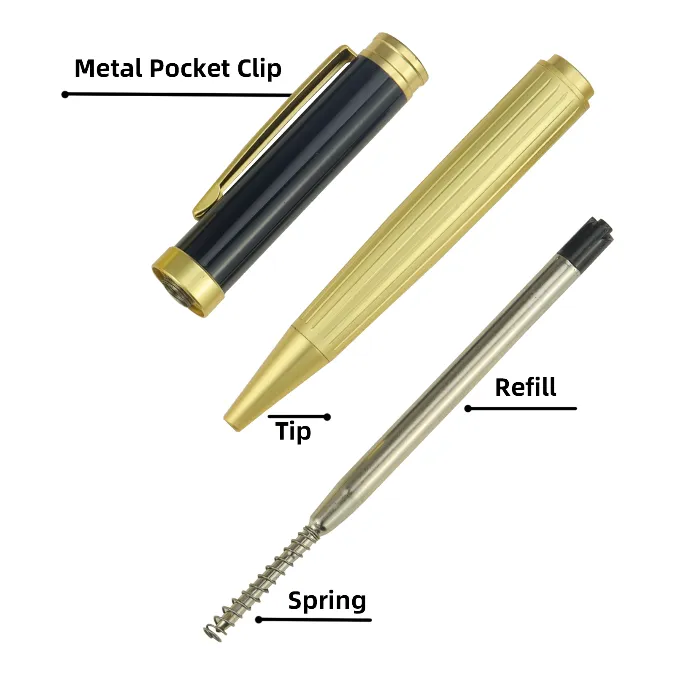
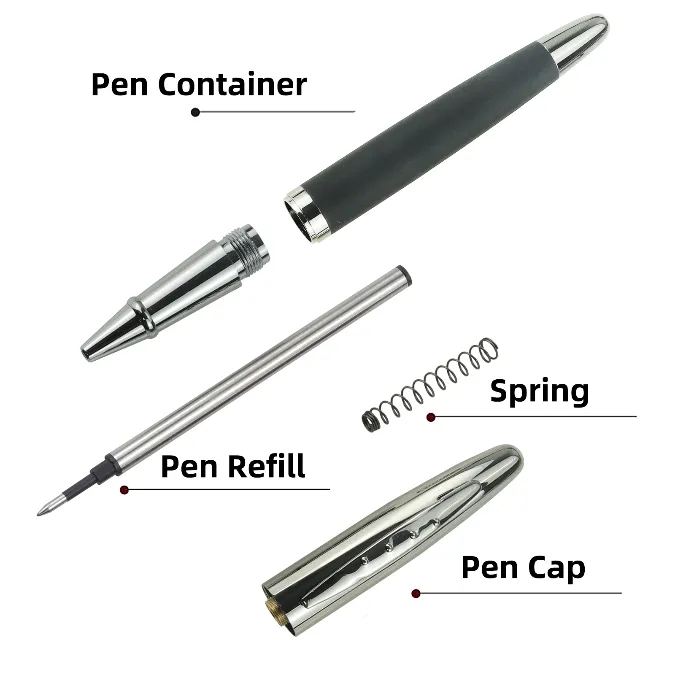
Every ballpoint pen relies on a precision-engineered ball-and-socket tip, an ink reservoir, and a protective outer barrel to deliver consistent, skip-free writing across thousands of pages.
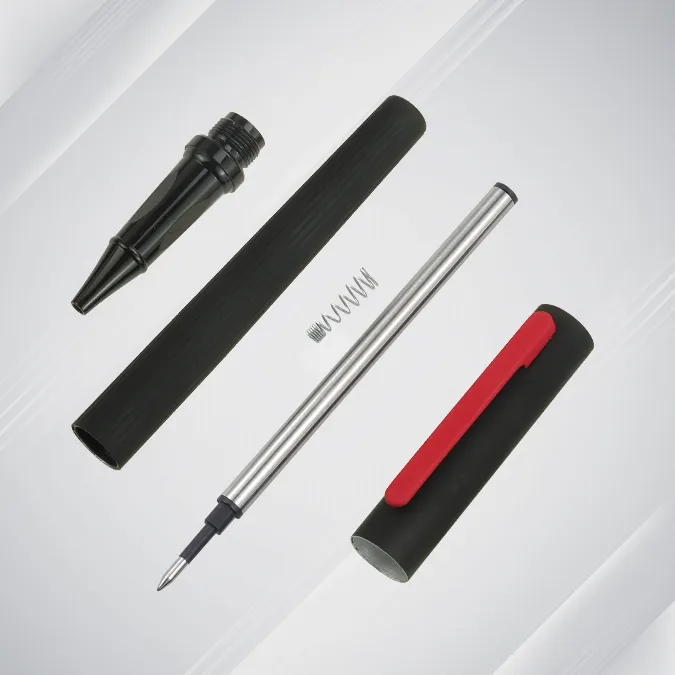
In most designs, the main components of the ballpoint pen include the barrel, ink reservoir or refill, metal tip, rotating ball, and either a cap or a retractable mechanism; ~에 custom ballpoint pens, extra parts such as a clip, grip, spring, push button, decorative ring, or gift box may also be added based on the product design and target market.
The barrel is the visible body of the pen and is commonly made from plastic or metal, while the tip assembly controls ink delivery during writing. The refill stores the ink, and the small ball at the tip rotates to transfer ink onto paper in a controlled, clean way.
Overview of Key Parts of a Ballpoint Pen
| 요소 | 기능 | Common Materials |
|---|---|---|
| 통 | Holds and protects the internal structure; provides branding area. | Polypropylene, polystyrene, 알류미늄, 놋쇠, stainless steel |
| Ink reservoir / 다시 메우다 | Stores ink and feeds it to the tip. | Plastic tube with oil-based ink |
| Tip socket | Holds the ball and regulates ink flow. | Brass or precision metal |
| Ball | Transfers ink to paper as it rotates. | Tungsten carbide, sometimes steel or brass |
| 봄 | Returns the refill in retractable pens. | Metal spring |
| Thrust / click device | Locks and releases the refill in click pens. | Plastic and metal internal components |
The Core Writing Mechanism: 팁, Ball, and Ink Reservoir
Understanding what makes a ballpoint pen work starts at the point of contact. The core writing mechanism depends on a microscopic, rotating ball-and-socket joint. Manufacturers typically craft the ball from ultra-hard tungsten carbide and seat it inside a precisely machined brass socket. As the ball rolls across the paper, it pulls ink through microscopic channels, transferring it onto the page without leaking.
Behind the tip sits the internal ink cartridge. This reservoir holds a highly specialized paste ink designed specifically to prevent skipping and drying out. Formulating this ink requires a precise blend of raw materials to guarantee continuous flow:
- Dyes and Pigments: Provide the core color, usually making up 25-40% of the formula.
- Solvents: Ensure the paste remains viscous enough to flow steadily down to the ball.
- Resins: Control drying time and bind the ink components together.
- Fatty Acid Lubricants: Reduce friction between the ball and socket to maintain smooth rotation.
The Exterior Shell and Retractable Hardware
The outer body, or barrel, serves as the structural foundation that encases all internal parts. Beyond simply housing the ink, the barrel determines the ergonomic grip and weight balance of the pen. Factories produce high-volume, disposable barrels using injection-molded plastics like polypropylene or polystyrene. For premium markets, pen manufacturers opt for die-cast or CNC-machined metals, utilizing aluminum, 놋쇠, or stainless steel to increase durability.
Standard capped pens keep things simple, but retractable click models require additional internal hardware to extend and protect the tip. These mechanical systems rely on several interconnected parts:
- Thrust Device: A mechanical cam system that locks and releases the ink cartridge with every click.
- 봄: Provides the necessary tension to snap the cartridge back into the barrel when not in use.
- Metal Nose Cone: The threaded front piece that aligns the cartridge tip precisely during writing.
Overview of the Ballpoint Pen Manufacturing Process
| Step | Process Stage | Key Activities | Purpose |
|---|---|---|---|
| Step 1 | Pen Barrel Production |
Injection molding (플라스틱) CNC machining & metal finishing (금속) |
Form the structural body of the pen |
| Step 2 | Metal Tip & Ball Manufacturing |
Tungsten carbide ball grinding Tip stamping, machining, and assembly |
Ensure smooth ink flow and writing precision |
| Step 3 | Ink Formulation & Filling |
Ink mixing (pigments, solvents, resins) Metered filling & air removal Sealing & batch testing |
Ensure stable ink performance and leakage prevention |
| Step 4 | Pen Assembly |
Automated component integration Assembly of capped, click, and twist mechanisms |
Build complete functional pen structure |
| Step 5 | 인쇄 & 맞춤화 |
패드 인쇄, silk screen, laser engraving, UV 인쇄 Artwork preparation & digital proofing |
Apply branding and corporate identity |
| Step 6 | Quality Control & Testing |
Writing test, drop test, ink leakage test Salt spray test, clip strength test |
Ensure performance, 내구성, and consistency |
| Step 7 | 포장 & Final Inspection |
Sorting, counting, 포장 (bulk or gift boxes) Final appearance inspection |
Protect products and prepare for shipment or retail |
Step 1: Producing the Pen Barrel
Producing the pen barrel relies on high-speed injection molding or precision CNC machining to form the core structural body, preparing it for finishing and automated quality inspections.
The pen barrel is usually made from plastic or metal, depending on the product positioning.
Plastic Barrels (Most Common)
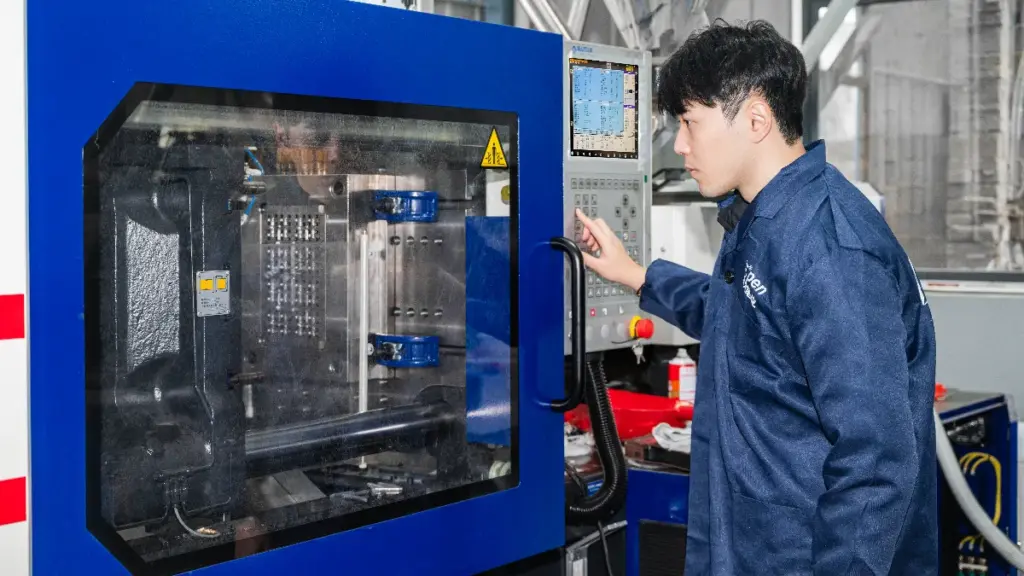
For plastic ballpoint pens, the barrel is usually made by injection molding. In this process, thermoplastic material is heated until it melts, then injected under pressure into precision steel molds that form the shape of the pen body, grip, cap, clip, or button.
After molding, the parts are cooled, ejected, trimmed, and sorted for the next stage. Injection molding is widely used because it supports high-volume production, stable dimensions, and repeatable quality, which is essential for promotional pens and large OEM pens orders.
장점:
- Low cost
- High production speed
- Suitable for promotional pens
Metal Barrels (Premium Segment)
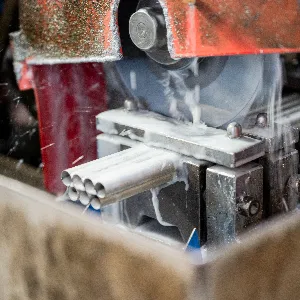
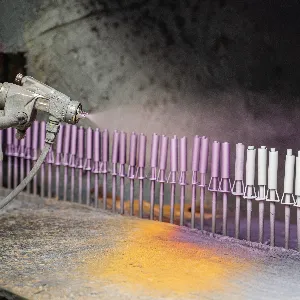
For metal pens, the barrel is produced differently. Instead of plastic molding, pen manufacturers commonly use metal tube cutting, machining, forming, polishing, and surface finishing (anodizing, polishing, 그림) to achieve a stronger, more premium body suitable for executive gifts and branded sets.
장점:
- Premium feel
- Higher durability
- Ideal for corporate gift sets
Step 2: Manufacturing the Metal Tip and Ball
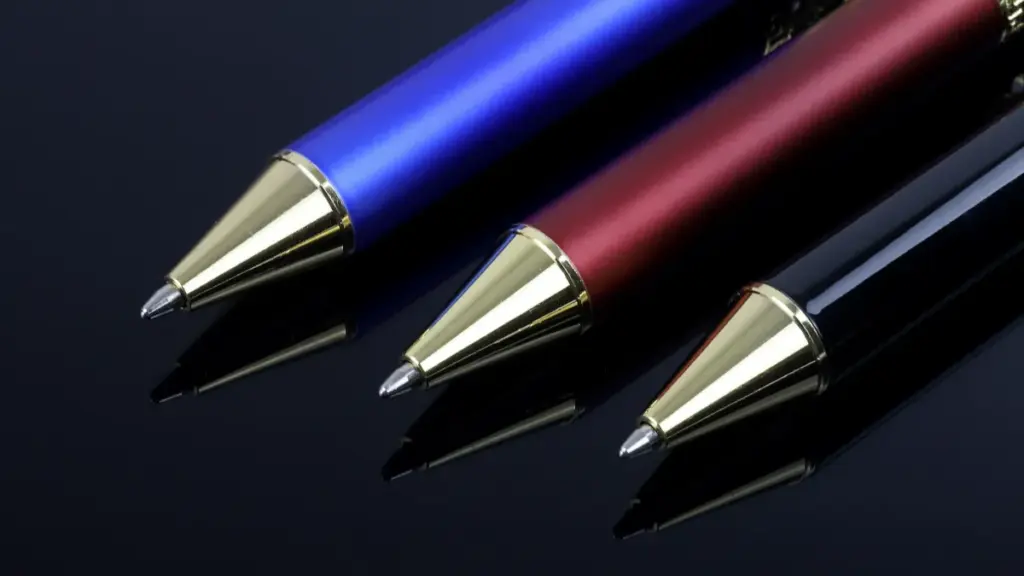
The metal tip is one of the most critical components of a ballpoint pen. Its precision directly affects writing smoothness, ink flow, and overall durability.
Shaping the Tungsten Carbide Ball
The ball is typically made from tungsten carbide, a material known for its exceptional hardness and wear resistance.
In industrial production, tungsten carbide powder is first sintered under high temperature and pressure to form solid blanks. These blanks are then processed into small spheres.
다음, precision grinding machines use diamond-based abrasives to polish the balls into near-perfect spheres. This step requires micron-level accuracy, as even slight deviations can affect rotation and ink delivery.
Consistent ball diameter ensures:
- Smooth and stable writing
- Controlled ink flow
- Reduced risk of leakage
Quality control teams perform sampling inspections and dimensional checks to ensure each batch meets strict tolerances before moving to assembly.
Stamping and Engineering the Metal Socket
The pen tip (also called the socket or nib housing) is usually made from brass or stainless steel, chosen for their strength and corrosion resistance.
The process includes:
- Stamping: Metal sheets are stamped into small components using high-speed presses.
- Forming and Machining: These components are then shaped into precise tip structures that can hold the ball securely.
- Micro-drilling and finishing: The ink channel is formed, and the inner surface is refined to ensure smooth ink flow.
The key challenge is achieving the correct clearance between the ball and the socket:
- Too tight → restricted ink flow
- Too loose → ink leakage or unstable writing
Ball Insertion and Tip Assembly
In the final stage, automated machines insert the polished ball into the metal tip.
The ball is mechanically seated and crimped into place, allowing it to rotate freely while remaining securely fixed within the socket.
Typical ball sizes range from 0.5 mm to 1.0 mm, depending on the writing style (fine vs. medium).
Once assembled, the tip unit is ready to be connected to the ink refill in the next stage.
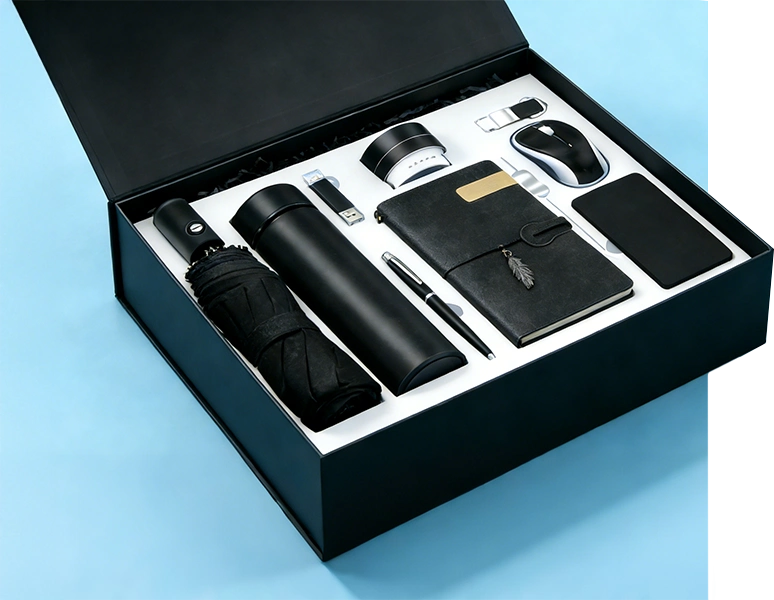
Source Premium Corporate Gifts with 100 MOQ
Step 3: Ink Formulation and Filling
Formulating the Oil-Based Ink
Ballpoint pen ink is a viscous, oil-based paste designed for controlled, long-lasting writing performance. It is produced by blending several key components in industrial mixing systems.
Typical ingredients include:
- Dyes or pigments for color consistency
- Organic solvents (such as glycol ethers or benzyl alcohol) to regulate flow
- Resins to adjust viscosity and adhesion
- Additives for lubrication, oxidation resistance, and writing stability
The mixing process is carried out under controlled temperature and agitation conditions, typically within a moderate heating range of around 40°C to 70°C. This helps dissolve resins and colorants more effectively while ensuring a uniform and stable ink structure.
A critical parameter is viscosity, which is carefully adjusted based on the desired writing performance. 대부분의 경우, ballpoint ink falls within a high-viscosity range of approximately 5,000 에게 30,000 centipoise. This allows the ink to remain stable inside the refill while enabling smooth, consistent ink flow through the rotating ball.
Before moving to the next stage, quality control teams perform:
- Viscosity testing
- Color consistency checks
- Stability evaluation
These checks ensure the ink will not separate, leak, or dry out prematurely during storage and use.
Executing the Ink Filling Process
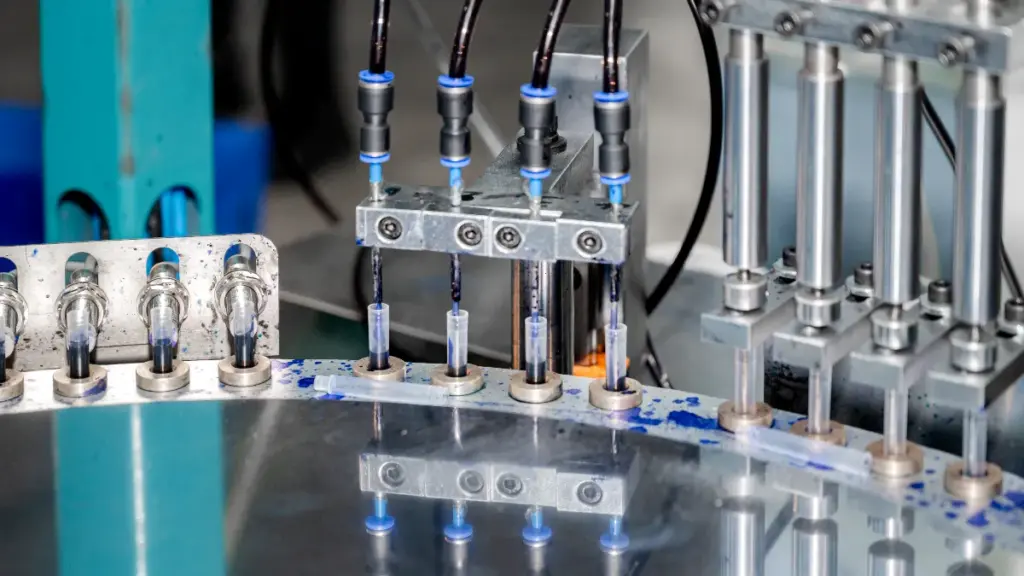
Once the ink passes inspection, automated systems take over the filling process to ensure precision, efficiency, and consistency.
볼펜 잉크는 점성이 매우 높기 때문에, ballpoint pen manufacturers use metered filling equipment to accurately control the volume of ink in each refill while minimizing air contamination.
1. Controlled Ink Filling
In most production lines, ink is filled from the back end of the refill tube using precision injection systems. This method allows accurate dosing and reduces the risk of leakage.
In some production setups, filling may occur after the tip assembly, depending on the equipment design.
2. Air Removal and Flow Stabilization
To ensure smooth writing, the process is designed to minimize trapped air inside the refill.
Air bubbles can lead to:
- Ink skipping
- Interrupted writing lines
- Inconsistent ink flow
Some ballpoint pen manufacturers use vacuum-assisted filling or controlled settling time to improve ink stability.
3. Sealing the Refill
After filling, the refill is sealed to maintain ink integrity and prevent leakage during storage and transportation.
Common sealing methods include:
- Plastic end plugs
- Heat sealing for compatible materials
- Mechanical sealing or crimping, depending on refill structure
4. Batch Testing and Inspection
Before the refills move to final assembly, each batch undergoes strict quality checks, such as:
- Leakage testing under pressure or temperature variation
- Writing performance tests for smoothness and consistency
- Ink flow evaluation to ensure no skipping or blotting
Only refills that meet all standards proceed to the pen assembly stage.
Step 4: Assembling the Pen Components
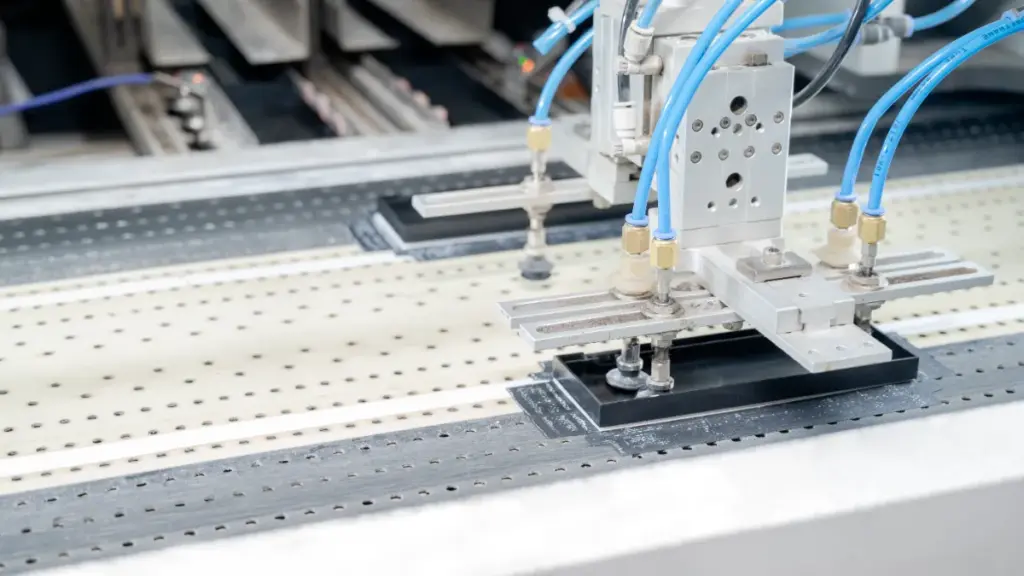
High-speed automated lines integrate molded barrels, filled cartridges, and precision tips, ensuring exact alignment and flawless structural integrity across capped, click, and twist-action models.
General Assembly Sequence
In high-volume production, components such as barrels, refills, tips, springs, and clips are delivered via automated conveyors to designated assembly stations.
Automated systems then position and assemble each part with precision, ensuring a secure fit and stable structure.
Typical assembly steps include:
- Refill insertion:
The pre-filled ink tube, already fitted with the metal tip, is inserted into the pen barrel. - Component positioning:
Internal parts such as springs or push mechanisms are placed into position depending on the pen design. - Outer structure assembly:
클립, caps, or push buttons are attached to complete the external structure.
Assembly Variations by Pen Type
Different pen designs require distinct assembly tracks. The complexity of the internal mechanism dictates the machine configuration on the factory floor.
- Capped pens: Assembly prioritizes press-fitting the tip to the refill and securing an airtight cap to prevent the ink from drying out.
- Click-action models: The production line inserts push buttons, rotors, and steel springs into the barrel to build out the internal retraction mechanism.
- Twist-action pens: Automated tracks integrate a rotational cam and helix mechanism to manage smooth tip extension.
Step 5: 인쇄, 브랜딩, and Customization
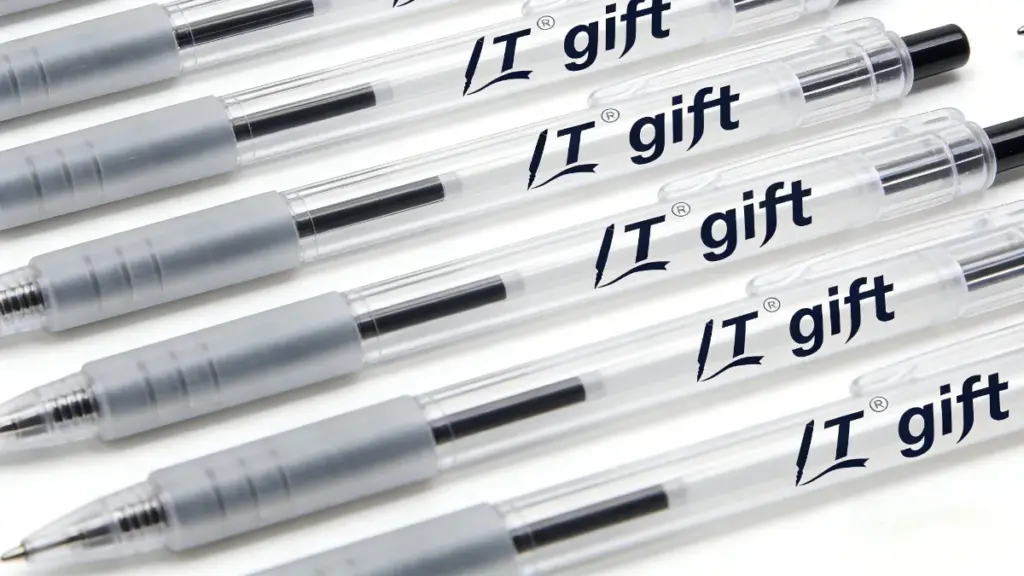
The final step in pen manufacturing applies precise branding. Selecting the proper printing technique and formatting artwork correctly ensures brand durability across high-volume orders.
Selecting the Right Printing Technique by Material
Choosing the appropriate branding method depends on the pen material, surface shape, and design complexity. Each technique offers different advantages in terms of durability, 비용, and visual impact.
| Method | 최고의 대상 | Key Advantages |
|---|---|---|
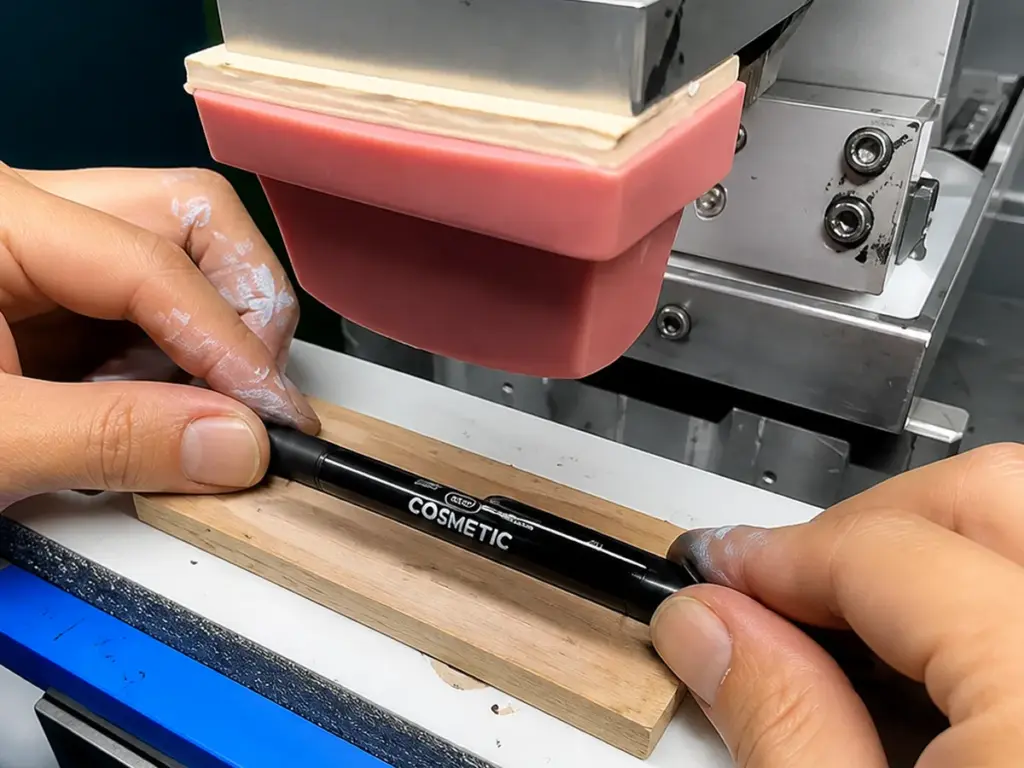
| Pad Printing | 플라스틱 & curved surfaces | Cost-effective for large runs, supports 1–4 spot colors |
| Silk Screen Printing | Cylindrical barrels | Strong ink coverage, suitable for larger logo areas |
| 레이저 조각 | Metal pens | Permanent, 긁힘 방지, premium appearance |
| UV Digital Printing | Flat or semi-flat areas | Full-color graphics, 높은 디테일, fast setup |
- 패드 인쇄 is widely used for promotional pens due to its efficiency and adaptability to curved surfaces.
- 실크스크린 인쇄 provides solid and durable color coverage, especially on cylindrical barrels.
- 레이저 조각 creates a long-lasting mark by removing the surface layer, making it ideal for executive or metal pens.
- UV 인쇄 allows full-color logos, 그라데이션, and even photographic elements for more complex branding needs.
- Selecting the right method ensures that the branding remains clear and durable during daily use.
Artwork Preparation and Digital Proofing Standards
Pen factories need exact digital instructions to execute branding without errors. Small pen barrels leave zero margin for pixelation or misaligned artwork.
- File Formats: Factories require vector file formats like SVG, AI, or EPS to maintain sharp edges and prevent pixelation at extremely small scales.
- Design Limits: Designers avoid stroke weights under 0.5pt and complex gradients. Small barrel dimensions often obscure fine lines and subtle color shifts.
- Color Calibration: Production teams use the Pantone Matching System (PMS) to calibrate exact ink shades for pad printing. Laser engraving naturally reveals the underlying base material color.
- Digital Proofs: Digital proofs verify exact logo placement, scale, and color accuracy before factories initiate standard mass production runs.
Step 6: Quality Control and Testing
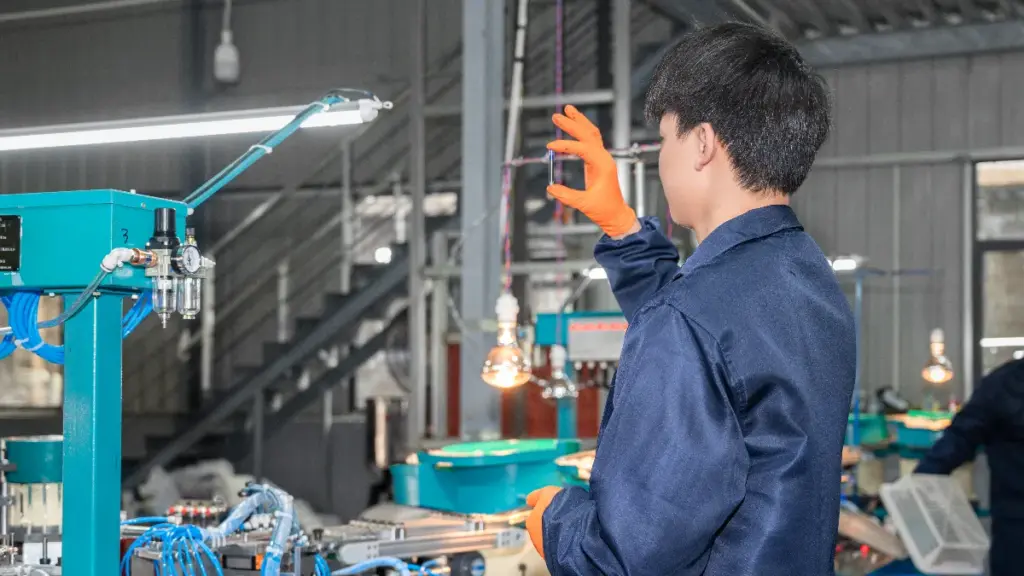
Quality control ensures that every pen performs reliably in real-world use, from smooth writing to long-term durability. Instead of relying on a single inspection point, ballpoint pen factories carry out multiple functional tests throughout the production process.
The writing test is the most basic but essential check. It evaluates whether the pen writes smoothly, produces consistent ink flow, and avoids skipping or blotting. This directly reflects user experience in daily writing.
The drop test simulates accidental impacts during transport or use. It checks whether the pen barrel, 다시 메우다, and internal structure remain intact after being dropped from a certain height, ensuring overall durability.
For metal pens, a salt spray test is often applied to measure corrosion resistance. This test is especially important for premium pens, as it ensures the surface coating can withstand humidity and long-term storage without rusting or discoloration.
The ink leakage test examines whether the refill remains stable under pressure, temperature changes, or extended storage. This helps prevent ink from leaking during shipping or in hot environments.
마지막으로, the clip strength test evaluates how firmly the pen clip holds onto pockets or notebooks, ensuring it does not loosen or break after repeated use.
Step 7: Packaging and Final Inspection
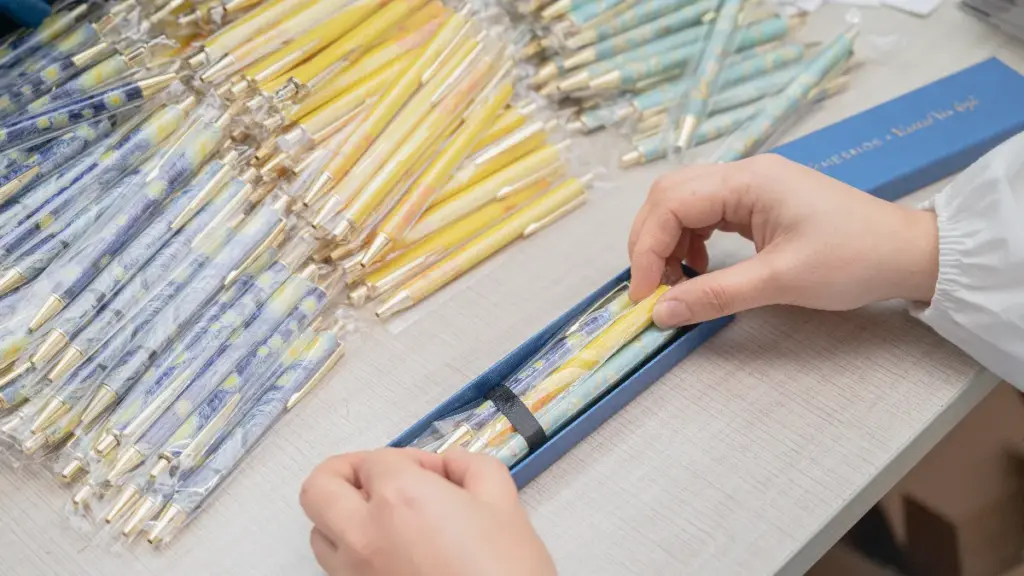
After the pens pass writing and appearance checks, they move to the packaging area for counting, sorting, and final inspection. Depending on the sales channel, pens may be packed in bulk cartons, polybags, window boxes, blister packs, or premium gift boxes.
For OEM and promotional orders, packaging often needs to support both product protection and presentation quality. This is especially true for executive pens, retail-ready sets, and pen-plus-notebook gift solutions, where the box itself is part of the customer experience.
Cost of Making a Ballpoint Pen
The cost of making a ballpoint pen depends on the material, 펜 구조, branding method, 주문 수량, 포장, 및 품질 기준.
In general, a simple plastic promotional ballpoint pen may cost around $0.07–$0.2 per piece in bulk, while a custom metal ballpoint pen often falls around $0.3–$1.50 per piece without a gift box.
If the pen is packed as a business gift, the total cost will be higher. A custom pen gift set with box may range from about $0.90 에게 $1.88 세트당, while the gift box alone may add roughly $0.22–$0.44 depending on the material and structure.
메모: These are general bulk-reference ranges for the China supply market. Actual production cost varies by specification, printing method, 포장, and order volume.
The final price usually changes based on several factors:
- Raw materials such as plastic, 놋쇠, 강철, tungsten carbide, and ink.
- Molding or machining complexity, especially for custom shapes or metal bodies.
- Logo decoration, such as silk-screen printing, UV 인쇄, or laser engraving.
- Assembly requirements for retractable or multi-part designs.
- Packaging level, from bulk cartons to premium gift boxes.
In most B2B orders, the unit price becomes lower as volume increases because tooling, setup, and labor are spread across more pieces. That is why buyers usually evaluate MOQ, customization level, and packaging together at the quotation stage.
Types of Ballpoint Pens
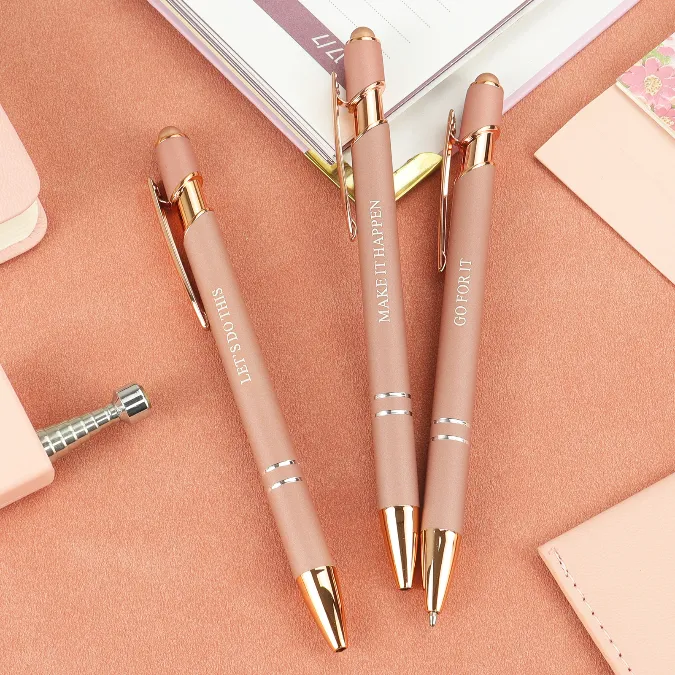
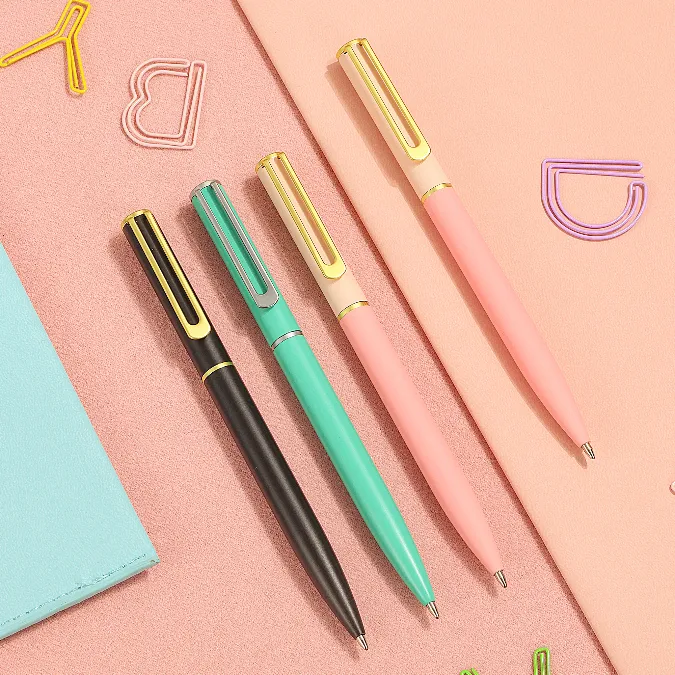
Ballpoint pens come in many formats, and the manufacturing route changes slightly based on product type. The most common categories include disposable plastic pens, retractable click pens, capped pens, metal executive pens, multifunction pens, and gift-set pens paired with notebooks or accessories.
From a commercial view, each type serves a different market goal. Lightweight plastic pens fit large promotional campaigns, while metal pens and coordinated gift sets are better for corporate branding, client appreciation, hospitality, and premium retail presentation.
| 유형 | 일반적인 사용 | Manufacturing Focus |
|---|---|---|
| Plastic promotional pen | High-volume giveaways | Fast injection molding and low unit cost |
| Click pen | Office and daily writing | Extra internal mechanism assembly |
| Capped pen | Simple, economical writing | Easy assembly and tip protection |
| Metal pen | Executive gifts and branding | Machining, polishing, 조각, premium finish |
| Gift-set pen | 기업 선물 | Product matching, presentation packaging, branding consistency |
Read more: Different Types of Pen and How to Choose the Right One for Branding
최종 생각
Ballpoint pen manufacturing is a detailed process, and product quality depends on how well each step is controlled—from barrel production and tip making to ink filling, 집회, 인쇄, and final inspection. When every part works together smoothly, the result is not only a reliable writing tool, but also a product that presents your brand in a clean and professional way.
For brands looking for custom pens, 금속 펜, or matching pen and notebook gift sets, working with a ballpoint pen manufacturer that understands both production and presentation makes a clear difference. ~에 르티안 선물, we focus on combining dependable manufacturing, 유연한 맞춤화, and coordinated gift solutions to help turn everyday stationery into products people are happy to use and keep.
If you are planning your next pen project, our team can support you from concept development to mass production with fast sampling and reliable delivery timelines.
자주 묻는 질문
How much does it cost to produce a ballpoint pen?
The cost typically ranges from $0.10 에게 $5.00+, depending on materials, design complexity, 및 주문 수량. Large-volume orders significantly reduce unit cost.
What are parts of the ballpoint pen?
The main parts include the barrel, refill tube, 잉크, tip, ball, spring, clip, and cap or click mechanism.
What materials are used to make pens?
Ballpoint pens are commonly made from plastics, 놋쇠, stainless steel, tungsten carbide, and oil-based ink materials. Plastic is often used for barrels and caps, while metal is common for tips and premium pen bodies.
How is pen ink filled into the refill?
Ink is filled using automated machines that inject measured amounts into the refill tube while removing air bubbles to ensure smooth writing.
What is injection molding in pen production?
Injection molding is a process where melted plastic is injected into a mold to form the pen barrel. It allows fast, consistent, and cost-effective mass production.
How are metal pens manufactured differently?
Metal pens are generally made through metal tube processing, machining, forming, polishing, and finishing rather than standard plastic injection molding for the main body. They usually require more surface treatment and are often positioned as premium products.
What quality tests are done before pens are shipped?
Typical tests include:
- Writing performance tests
- Drop and durability tests
- Ink leakage checks
- Corrosion resistance tests
- Clip strength testing